I've been to a handful of rock and pop concerts this year (and yeah, I've neglected to blog about them), and one thing that's become obvious is that high-quality, presumably back-projected video screens have now become financially entirely accessible to, well, a lot of the sort of bands who play the Corn Exchange. Marina and the Diamonds are using theirs to show some pretty good pop-art-flavoured visuals during their current tour, but I suspect that the system isn't entirely bug-free, and may have been the cause of the dread Technical Difficulties which generated about an hour's delay between the support act (who didn't make much of an impression on me; I think they could do with something to fill the sonic space between the thud of bass and drums and the ping of synthesisers and falsetto of the singer) and the main event. At least, the screens once or twice displayed giant Windows menu bars in that time, which I take as a sign of glitches. Add in a notable amount of time spent queueing outside before the doors opened, and, well, things ran a bit late. Then, it turned out that the lighting designer had decided to silhouette Marina herself with a full-strength white spot, angled up from behind her, for some songs. Which would be fine if it hadn't meant everyone in the balcony going "Aaargh" and shielding their eyes...
All of which techie wobbliness was rather unfortunate, because it was actually rather a good gig. Marina Diamandis combines a genuine talent for writing good old-fashioned catchy choruses with a certain amount of stage presence and charisma. This in turn meant that, although she had assembled a highly competent band for this tour, she genuinely didn't need to hire any backing singers; when she wanted vocal filling, all she had to do was point her microphone at the standing audience down at the front and tell them to supply it. (Diamandis does say that the "Diamonds" are her fans, after all...) This approach did leave her slightly more restrained and introspective songs, such as the rather cool "Immortal", looking a little out of place, but overall this was an effective pop-as-in-popular performance. Diamandis manages to be a plausible feminist while wearing three different glittery costumes, one including cute mouse ears, in a ninety minute show, too.
It has to be said that Diamandis's songs aren't as clever as they maybe think they are; the message in the likes of "Savages" is hardly subtle. But then, it's pop music, and its heart is absolutely in the right place. Worth a little waiting and some being dazzled.
"minutes and seconds live" is just a CD when all's said and done, of course, well put-together and clear on the ear but not the same as being there. Still, it preserves the interesting rearrangements of some of Moyet's classic songs, and it's a decent memento of an excellent tour. Recommended to those to whom that means something.
I confess I hadn't been following any news or reviews before I went off to this gig, so I came to things quite fresh. To start with, I was interested to see what sort of backing band Alison Moyet would bring with her. This is, after all, a woman who moved from '80s pop to jazz standards, a stint on a musical, and even things like Purcell operatic arias (with a voice that can work with all this), trailing a range of backing musicians to suit. Well, come the time, on came ... a couple of synthesiser players, looking worryingly like the guys who come on when Bill Bailey is doing a Kraftwerk parody. Yes, the former lead singer of Yazoo had decided to revert to electronica for this tour.
And very good they were too, actually. The two guys were actually multi-instrumentalists (and one also acted as a backing singer, often I'm pretty sure singing higher than Moyet herself), and the set was built round a really good mix of tracks from Moyet's latest album, The Minutes, and from her back catalogue. From deep in that catalogue, in fact, as she commented when pointing out that at least one of these songs was written when she was 16. I can quite believe that the lyrics of "Nobody's Diary" came from a bright, passionate teenager; if she also created that small gem of a synthesiser riff back then, she really was a prodigy.
(Alison Moyet herself was looking damn good, by the way. Apparently,
she's been saying in interviews that she thinks she may have overdone
the weight loss a bit, and nobody could blame her if she put a couple of
pounds back on. But she sure as hell doesn't look unhealthy in a black blouse and jeans. Definitely an inspiration to her generation.)
She announced that she had been rearranging the old songs, not wanting to act as a human jukebox; some of the rearrangements were more dramatic than others - notably slowing down "Is This Love?" to a wilful extreme, and setting "Only You" (a song whose innate melancholy is a bit at odds with its poppy jauntiness) in a minor key. In general, everything worked great, and I got the impression that Moyet herself was enjoying the process. Which probably makes this the best way to handle assembling a set of songs from across a thirty-year career. Oh, and you can dance to a lot of them, too, as was probably sort of the point of putting a straightforward rendition of "Don't Go" at the end of the encores. If some of the newer songs had fewer catchy hooks than some of the early numbers, building instead on a foundation of crunching rhythm guitar, they still worked in their own way, sounding like theme tunes for a James Bond movie if Bond went a little bit gothic.
Moyet gave "Filigree", one of the key tracks from The Minutes (and a song which is loaded with gorgeous hooks), a long introduction in which she explained it was about the experience of realising that the trick is to wait for the moments when everything comes together. I think that this gig demonstrated that for me. I just hope that we might get a live album from this tour.
Posting this a month or so late, but what the heck.
To start with, a boast. I first saw Magazine in (I think) 1978 at a gig in a university hall, and then again in 1979 at the Corn Exchange. So, having made it to their gig at The Junction, I think I must have seen them every time they've played Cambridge.
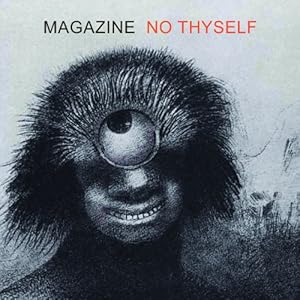
Actually, the '79 gig was one of Angela's and my first dates, so we weren't going to miss this one. But first, we got hold of No Thyself, their first new recording as a band for thirty years. I'm not sure if anything on this is quite up to their best work c.1980, but it's definitely real Magazine, recalling, say, the menacing pulse of "The Light Pours Out of Me" in "The Burden of a Song", and the deliberate four-letter shock effects of "Permafrost" (only more so) in "Other Thematic Material". The pushing-for-accusations-of-bad-taste lyric of "Hello Mister Curtis (with apologies)" might almost count as something new, except in that it fits with Howard Devoto's general, habitual post of punky irony. (Though that his disdain clearly extends to punk: "No decadence, no cheap thrills of hate from me...") Some of the songs could probably grow on me quite a lot, in fact; they may look like conscious recreations of the band's old style, but in the worst case, that's a fine model to emulate.
(I was amused when some critics detected a new maturity in "Of Course Howard", incidentally, given that I recognised some of the lyrics from the introduction to a collection of other Magazine lyrics published thirty years ago. Actually, the song seems to represent a dialogue between Devoto today and his younger self, which is interesting in itself.)
But anyway... For those who don't know them, Magazine were a group who evolved out of the punk scene when lead singer Howard Devoto decided to do something a bit unashamedly smarter, then vanished when Devoto apparently just got bored of the whole business, leaving a legacy that took the rock world decades to acknowledge. Unfortunately, since 1981, John McGeoch, the band's authentic post-punk guitar hero, has died. Also, when they reformed in 2009, Barry Adamson, their bass player and other most strikingly capable musician, rejoined, but he's since evidently decided that his career in film music and so forth means more to him, and walked away. The replacements, Devoto's occasional collaborator Noko on guitar and "Stan" on bass, are entirely capable of emulating the originals' playing well enough, but whether they can emulate the original synergistic, innovative brilliance is another matter.
Not that the audience at this gig were too worried (and I speak as one of them, believe me). We may not have had associations with the two guys on his left and right, but that was Howard Devoto in the middle. Okay, a lot of us were clearly there to be reminded of our youth. I haven't seen this many grey hairs and this much male-pattern baldness since ... um ...the last folk gig I was at. And I guess that Devoto, who's gone from "high forehead" to "bald" in thirty years, could feel entirely at home in this company. But enough tacky irony. That's Howard's job.
The set consisted of a mixture of old and new songs, in pretty conventional rock gig style, really, not that I'm complaining. It even used staging tricks I remember from thirty years ago, notably hitting the audience full in the face with white spotlights behind the band for "The Light Pours Out of Me". Among the new songs, "Hello Mister Curtis" was dedicated, a little strangely, to Terry Pratchett; I assume that the point there is that the song is about facing up to mortality, though whether its pose is one of acceptance or defiance - whether the lyrics are addressed to Ian Curtis and Kurt Cobain in tones of wry admiration or contemptuous sarcasm - seems unclear. Clarity has never been the point with Magazine, mind; during the first song, Devoto was at one point wandering around the stage with a placard say "You Do The Meaning".
And we will, Howard, we will. Whether we were here for abrasive surrealism, or wry and twisted humour, or to be reminded of our student days, or just because we know the band will rip into that guitar riff in the encore of the monumental classic "Shot By Both Sides", we all likely went away satisfied.
The support, incidentally, were In Fear of Olive, whose country-tinged rock was competent enough, but seemed on this brief exposure to lack sufficiently memorable tunes, aside from the fact that they really didn't look to have much in common with Magazine. But the support act in '79 was Simple Minds, and I didn't think very much of them, so what do I know?
(More catching up on a bunch of posts that have been sitting around half-finished for far too long.)
The Junction, Cambridge, 29th March 2011.
At 8 o'clock in the evening of March 29th - the scheduled start time, good heavens - an amiable old buffer in a waistcoat and beret ambled on stage and launched into a show which lasted a couple of hours, with an interval...
The last time I saw Neil Innes on stage was thirty-something years ago, when he was basically playing the good stuff from his TV series of the time. This older, plumper, greyer Innes was playing something a bit less formal and structured and a bit more relaxed. I think that there was stuff from a radio series, but I confess I'm not familiar enough with his repertoire; there was certainly little sense of product to sell, except perhaps for retrospective collections. There was a bit of chat between songs, some of it going back to the foundation of the Bonzo Dog Doo-Dah Band (basically, a bunch of London art students bonded over a taste for not-very-good pre-war British trad jazz) and including recollections of that band's somewhat edgier leading light, Viv Stanshall, as well as some mention of Monty Python and the Rutles. It was all very pleasant. Innes, it must be said, clearly isn't very edgy at heart. Gentle comic melancholy is more his style. There were some comments that might have been taken to relate to contemporary politics, but they were at the level of general benevolence than satirical ferocity.
And yet - it wasn't hard to remember that this man has provided musical underpinnings for the defining Anglophone comedy of the last half-century. This is Sir Robin's minstrel and Ron Nasty. This is someone to catch up with from time to time.
British Sea Power are one of those bands that come along every few years to reaffirm one's faith in the basic guitar-band model of rock - even if they do have a cornet and an electric viola underpinning the guitars, and sing love songs to Antarctic ice sheets or create new soundtracks to 1930s documentaries. So when they turned up in Cambridge, I went along to see how they were live.
But first, there was the support band, Bo Ningen, who I guess can be described as some kind of mutant Japanese thrash metal. They opened with the sort of apocalyptic noise that a heavy metal band might use as a climax, then carried on from there. Works for some people, I guess.
Then, after half an hour in which the roadies attached assorted foliage to the mike stands, British Sea Power were on, kicking off with "Who's in Control", the opening track from their latest album. They turned out to be a well-rehearsed, capable bunch, albeit that their down-the-line rock approach on stage lost some of the breathy atmospherics of their recorded work. It's what the crowd wants, of course, and they may have given something of a hostage to fortune with the football-chant refrain in "No Lucifer" - the front rows of the audience were anticipating it some time before it came along - but there's no denying it's a good song, and they followed it with the punchy "Stunde Null" to hammer something home. That was around the middle of the set, after "Larsen B", "Something Wicked", and "Lights Out", and some of the subsequent songs weren't quite so interesting, making me wonder if they'd shot their bolt rather - but then they delivered "Living is so Easy" followed by "Waving Flags", which nailed that worry. "It Ended on an Oily Stage" showed up, too.
From where I was standing, British Sea Power seem caught in tension between being a crisply efficient, conventional guitar band, following the fifty-year-old script of "finishing" and then playing an encore and so forth, and being something a little bit more idiosyncratic and whimsical and British-rock-surrealist, with decorated stages, violas, and back-projected movie snippets. But they're actually rather good at both, so I'm not complaining at all.
I was at university from 1978 to '81, so Blondie are naturally an important part of my past. However, I never did get to see them back then, so the discovery that they were going to be playing Cambridge (I think for the first time ever, although I may have missed something in the last few years) was an opportunity to fill that gap in my life.
The evening began in appropriate '70s style; first, everyone had to queue up outside until the doors opened at the concert's advertised start time, and then the support band (Little Fish) turned out to be a three-piece (guitar/vocals, drummer, keyboards) with a female singer-guitarist playing jagged, slightly punky little songs; they weren't bad, but I found I was old-fashioned enough to wonder if they'd be better with a bass player to round out the sound.
Anyway, one interval later, Blondie hit the stage, starting with the inevitable assorted thin, slightly anonymous male musicians and then - Debbie Harry, wearing a platinum wig, shades, a black dress with a conical layered knee-length skirt, and Doc Martens. In other words, she looked a bit like some kind of crazy cat lady, if your neighbourhood crazy cat lady was a living goddess of power pop - complete with the voice we all remember, that coolly amused New York drawl. Actually, the voice may not be quite the subtle power tool it once was; during "Atomic", the crucial repetition of the title was first spoken, then handed over to the audience, then replaced with an apocalyptic guitar solo. Still, there was no doubt who this was.
The set actually turned out to contain a fair amount of new material - the band have a new album coming soon (and the new material sounded very Blondie) - which is great; this isn't just a self-tribute act, although many of the classics were in there too, to varying effect; this was a rock band with decent keyboards, not a synthesizer band, so "Maria" and "Call Me" were fine, while "Heart of Glass" was, well, rockier than the studio version. I never did catch who the line-ups lead guitarist was (Chris Stein, the long-time mainstay of the band, seemed to be leaving a lot of the lead work to this other guy), but he was a little bit prone to axeman exhibitionism. But that wasn't the point, was it? The audience of forty- and fifty-somethings (and some of their kids) were there to see the cool, streetwise blonde who was there before any of your Madonnas or Gagas. And we got what we came for.
If I'd wanted to give this post a smart-arse title, I'd have been spoiled for choice, wouldn't I? "Well-Respected Man", "You Really Got Me", "Not Like Everybody Else", "Loud, But Never Square"...
Or, to put it another way - well, it's not too hard to see some of the surviving legends of Ray Davies's form and era - from the far side of a stadium, at considerable expense. But in a venue the size of the Corn Exchange, for local-venue prices? That wouldn't really have been sensible to miss.
Of course, Ray Davies was one of the lesser Big Names of his era, being the most quintessentially British of the British Invaders. But I'll put him up there with any of them, for influence as well as talent. I don't really like "If no A, then no B, C, D, or F" comparisons - influence and history don't work like that - but subtract the Davies/Kinks influence and where are you with Bowie, or the Jam, or the Pretenders, or Blur? And the blighter was productive, too; every now and again at this gig I was thinking "Hey, he's used most of his big hits already, where's he going from here" - and then out would come yet another classic pop song.
Which said, being limited to the resources of a small-ish touring band did restrict the range of effects that Davies could apply, to the point where (whisper it) some of the songs were in some danger of sounding the same as each other. He started with just himself and another guitarist, playing mostly acoustic but seriously amplified, and then brought on the keyboards, drums, and bass; the classic rock/pop configuration, playing in fairly conventional style - and at one point performing a string of heavier numbers (yes, including "You Really Got Me") that would remind one that the Kinks also got some credit or blame for Heavy Metal. (Although to be fair, they probably gave it a useful sense of melody and some wit.) The other notable feature of the performance, though, the one off-beat stylistic touch, was the way that Davies used the audience in his arrangements.
I believe that he's long had some tendencies this way - live albums with the audience sounds mixed high, and so on - and I don't think that it's exactly egotism; rather, Davies treats his more exuberant fans (and the front row at this event were definitely exuberant) as part of the show and therefore part of the music, letting them provide vocal fills when they want to. The trouble is, a bunch of dedicated rock fans aren't the most precise of instruments... Still, it was often fun, and many of the songs could stand it, including some that perhaps shouldn't have had to. I've said before that "Waterloo Sunset" can withstand pretty well anything, and that turns out to include this sort of live performance with the audience providing occasional backing vocals.
Anyway - repeatedly, throughout the show, Davies and the band would hurtle yet again into some neat little pop song that was also a small masterpiece of slice-of-life poetry. And this guy wrote all this stuff, and has been performing since about 1962. The place was full of people of a range of ages, all doubtless being reminded of important parts of the soundtrack to their lives. I wouldn't have missed it for the world.
A covers album from Peter Gabriel has to be an interesting idea, but this is, well, Peter Gabriel; he's not one to take the entirely obvious route. Scratch My Back features a dozen interesting songs (some of which I was familiar with, some not) - all accompanied by modernist orchestral arrangements by John Metcalfe, and generally slowed right down to the point where Gabriel's singing occasionally approaches simple speech.
So it ain't exactly rock and roll. But it's good, in a self-consciously searing sort of way, and well worth a listen. It did occasionally remind me of Peter Sellers reciting the Beatles' "Hard Day's Night" in the manner of Laurence Olivier's Richard III, though.
There's apparently also going to be a CD made by the various people whose songs Gabriel covered, covering some of his songs in return. That may be interesting - it should feature David Bowie, Paul Simon, the Magnetic Fields, Randy Newman, and Neil Young, among others.
The "Special Edition" version is well worth the extra money, incidentally, less for the second CD (which has remixes of three of the tracks, plus definitive proof that "Waterloo Sunset" is an absolute poetic and musical masterpiece which can withstand absolutely any sort of assault) than for its inclusion of a code that gives a free three-month subscription to the Society of Sound - which means free downloads of high-quality versions of a clutch of varied but often very interesting albums.
As some of my older friends can probably attest through gritted teeth, I've always had a very large soft spot for Magazine. This is partly aesthetic (they were, after all, one of the most important and talented bands of the post-punk era), and partly sentimental (I saw them twice in my student days in Cambridge, and the second time was one of my early dates with Angela). But Magazine were a band who quit while they were ahead, when presiding genius Howard Devoto evidently decided that life as a rock star didn't suit him and ran away to join a photo library. (His subsequent musical projects, in Luxuria and ShelleyDevoto, never seem to have been more than hobbyist exercises.) Anyway, I presumably don't count as a proper Magazine fan; I didn't get to the reunion concerts last year...
Still, I did eventually get around to picking up the DVD of one of those shows (from Wire-Sound), so I guess that I get some latent fan points. I also get a pretty good down-the-line concert DVD, simply but slickly enough shot and presented given the slightly marginal nature of the exercise. It turns out that the members of the band have lasted pretty well, absent the sadly deceased John McGeoch, as has the band's music (but we knew that). In particular. when the event kicks off with "The Light Pours Out Of Me", we are forcibly reminded that Barry Adamson provided much of the heart and soul of the band, generating bass lines that are at once thunderous and melodious. (I'm not sure about his current apparent taste for top hats, but with that talent, he could get away with wearing a tutu.) Across the stage from him, McGeoch's replacement, Noko (who previously worked with Devoto in Luxuria) provided a remarkably effective emulation of one of the great rock guitarists of the last thirty years, only occasionally slipping into conventional axe hero antics that McGeoch would surely have avoided.
But it's the man between them who counts, and who's ... not changed, indeed who looks amazing unchanged (but he always looked a bit like an ageless alien reptile), but illuminated by time - and the main thing we can now admit is what a (deliberately) funny man Howard Devoto really is. Actually, Magazine in general and Devoto's lyrics and stage presence in particular were always loaded with irony and flippant surrealism, but jokes weren't what smart post-punk rock was supposed to be about back in 1980, and Devoto's threatening songs, laden with alienated lyrics, chilly electronic soundscapes, and razor-sharp Adamson and McGeoch riffs, could seem terribly serious if you let them. Now, though, when Devoto shows up in a pink jacket and plus fours, and announces that he's reformed the band to impress a woman, the joke becomes a bit more explicit. We've all had thirty years to relax (well, I have - I hope and would imagine that Magazine have fans these days whose parents hadn't even met when I saw them at the Cambridge Corn Exchange), and we can allow ourselves a more open awareness of the ridiculous.
Which reminds me - one fannish note. "Model Worker", a love song in the jargon of Chinese Communism (yes, some of us got that joke even back then) includes the line "I know the cadre will look after me". This was widely misheard when it was first played as "that Carter", and in 1981, Devoto played along by singing "I know that Reagan will look after me" instead. In 2009, he sang "I know Obama will look after me"... The only other odd lyrical tweak I noticed was in "Permafrost"; in the first chorus, "I will" became "you want me to", and there were even mumbles about political correctness from the sofa. But in subsequent iterations, that still-chilling-thank-you chorus reverted to its original form.
Oh, and I wonder - were these the first Magazine concerts with a backing chorus line (of two)? One of these ladies - Rosalie Cunningham, I believe - took duet parts on one or two songs, and had the Magazine cool down just right, with a perfect combination of a detached gaze, a razor-sharp black bob, and an LBD - plus a tendency to sit down on stage to read a magazine when her voice wasn't needed. She deserves credit.
The extras on the disc are pretty minimal - one song from a rehearsal room, one from a different concert - and there was very little new; just a re-enactment of greatness. But no matter. Sentiment assuaged.
When I ordered this DVD, I also picked up the CD which was apparently indirectly responsible for the reunion concerts happening - keyboard player Dave Formula's new Satellite Sweetheart, featuring every surviving member of the band (and indeed featuring a McGeoch credit on one track - presumably a sample from an old recording or something), which assembly inspired someone to think that they could also do some stage shows - along with Live and Intermittent, a collection of live tracks from Magazine's heyday which Formula has recently assembled. The latter may be moderately interesting as a historical document, but it's a very rough recording; completists-only stuff, really. The former is, well, despite all those appearances (on different tracks), not really how one imagines Magazine would have evolved, even over thirty years; Formula is evidently one of those (extremely talented) rock band members who'd really, really like to be showing what he can do by playing something slightly different - in this case, something like lounge jazz, a lot of the time. Adamson has gone the same way at times over the years, to be sure, but he at least has a taste for the sinister in his atmospherics. There were times on Satellite Sweetheart when I was irresistibly reminded of Derek Smalls's excursions into free jazz, but without the thundering bass (or the stunned audience). Still, it does feature Devoto singing on "Via Sacra"...
I first ran across "Mara Aranda y Solatge" in the form of a single track, "Romanç De La Porquerola", on a freebie CD with a magazine. This caught my attention enough that I eventually, recently, purchased the whole album it was from, Dèria, in MP3 form.That was a good move.
The album is, as I understand it, a set of modern treatments of 16th century Aragonese Spanish songs in some kind of Sephardic tradition. That probably sounds terribly academic, and to be honest, there are times listening to this stuff when a combination of nasal Spanish vocals and the buzzing of what I think are Galician bagpipes gets a bit ... worthily unprepossessing. Likewise, the harp solos can be a trifle obvious in their emotional effects. But then some extra layers of instrumentation cut in, or the quasi-flamenco rhythms shift into higher gear, and I'll forgive them pretty much anything.
"Romanç De La Porquerola" is probably still my favourite song here, in fact; a 6+ minute track that, for the first third, sounds like a melancholy medieval lament for bagpipes and voice. Then the rhythm section kicks in with a vengeance, and Aranda begins an intricate duet with the stringed instruments... I still don't have the faintest idea what she's singing about, but it still sends shivers down my spine for the next four minutes.
"Els Contrabandistes" hits high gear faster, whereas "Quatre Traginers" stays slow and probably tragic, while "Bolero De Guadassuar" has a lovely double-bass-driven opening... Oh heck, I'm attempting vague descriptions of stuff which I like but can't claim to understand. I like it, okay? It's evoking a culture where I probably wouldn't want to live even if I could speak the language, but if this is what their music sounds like, I'm happy to go visit.
(There seem to be some pretty good clips of the group playing live available on YouTube, incidentally. Worth a look.)
I haven't really followed R.E.M.'s development closely enough to essay a review of Live at the Olympia. They're not a band about which it feels permissible to attempt even a glib, smart-arse bunch of throwaway comments unless one has trawled studiously through the subtleties of the I.R.S. years and all that; heck, even they seem to avoid talking much about Automatic for the People, which a naive casual fan like me can regard as one of the great albums of the last fifty years or so.
I can say that this collection has some songs I recognise, and some I don't, and of the former, there are some wonderful performances, and some which aren't quite as punchy or enthralling as I've heard elsewhere. And I'll note that R.E.M. are clearly a great live band, who it'd be cool to catch in the flesh some day. But that's elementary stuff.
No, the reason I'm posting is simply a thought inspired by the DVD which came with the deluxe set which I picked up. Specifically; how can a band so alert to the history of rock and roll, and so paranoically diligent about avoiding cliche, include so many scenes where they wander around corridors backstage prior to going on. I mean, have they really not seen Spinal Tap?
In which is considered the question: Is Nina Persson selling out?
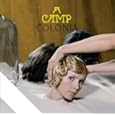
Well, not really. Anyone whose early work (with the Cardigans) mixed references to Emmerdale Farm with Black Sabbath covers is more or less permanently immunised against any accusation so naffly '70s. But a first couple of listens to A Camp's second album do rather suggest that it's short on the sinister-surreal edge of their first, cover art notwithstanding. A Camp used a lot of conventional-sounding instrumentation and arrangements, to be sure, but placed them behind Persson's dark or chilling or moving singing. This one just doesn't seem to have anything to match the bass-synth thunder of "Such a Bad Comedown", or as hook-laden as "The Bluest Eyes in Texas" - let alone as chilling as the Cardigan's similarly recent "And Then You Kissed Me", as smart as their "You're the Storm", or as potent as "I Need Some Fine Wine, and You, You Need to Be Nicer". And the loose theme of colonialism doesn't really seem to hold it together.
Still, it does have "Stronger Than Jesus" (Don't you know that love is stronger than Jesus?/Don't you know love can kill anyone?/Bring it on, wars and diseases...) and the mutant-'60s-girl-group style of "Here Are Many Wild Animals". I guess that Persson's self-possessed-masochist stance might begin to wear after a few more albums, but I'm still along for the ride.


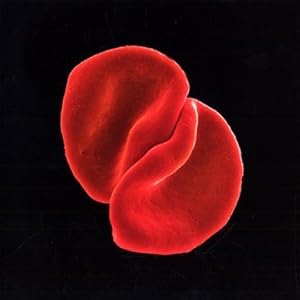
 features a dozen interesting songs (some of which I was familiar with, some not) - all accompanied by modernist orchestral arrangements by John Metcalfe, and generally slowed right down to the point where Gabriel's singing occasionally approaches simple speech.


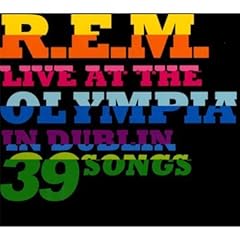
 . They're not a band about which it feels permissible to attempt even a glib, smart-arse bunch of throwaway comments unless one has trawled studiously through the subtleties of the I.R.S. years and all that; heck, even