Friday, October 02, 2009

Recent Reading: The Dragons of Babel

by Michael Swanwick

This one took me a while to finish. There were some external reasons for that, but I guess it may have been a bit of a bad sign.

I really rather enjoyed Michael Swanwick's The Iron Dragon's Daughter, so I was slightly bemused to discover that its sequel didn't seem to be getting UK publication, at least at the time when I looked. Possibly, I should have treated this as a bad sign. However, the Internet offers many solutions to problems, and I picked up an imported US hardback easily enough.

I seem to be hinting that this was a mistake. Well, perhaps it was - but not a catastrophic one. Swanwick can write, and he can also imagine, and his twisted modern vision of fairyland remains impressive. It's just not anything like as impressive this time around.

The Dragons of Babel reuses the picaresque structuring that worked so well in The Iron Dragon's Daughter, opening this time in a rural village in the fairy world. However, the villagers - a diverse bunch, including young Will, who is to be our hero - are painfully aware that there's a war on, and war-dragons duel in the skies above. One of them is damaged, crashes, drags itself into the village, takes over, and selects Will as its mouthpiece, revealing to him subsequently that his survival in that role proves that he must have mortal blood...

At which point, the past reader of The Iron Dragon's Daughter is wincing at the repetitiveness of it all. But Swanwick sidesteps that accusation fairly smoothly, as Will turns monster-slayer and disposes of the dragon within a few pages. A ghost of its personality actually remains in the back of his mind for the rest of the book, but frankly never does very much; we're getting more than a repeated story. We're just not getting as good a story.

Will is exiled from his village for the acts which his entanglement with the dragon induced, and Swanwick begins his clever shifting of stylistic gears, moving from timeless bucolic idyll/hero-tale to 18th century war-zone travelogue to refugee camp story, all the while enriching things with his modernised fairytale tropes. Then the prisoners, Will included, are transported to Babel, capital of fairyland's dominant political power, New York with extreme magical colour saturation and the dials turned up to eleven, and the book settles into what proves to be its favoured mode; pulp-style, street-level urban adventure. Will finds himself apprenticed to the sort of con artist who the pulps lionised and Hollywood came to love, and learns his way around the city, from the depths of its literal (or hallucinatory) underground to the spires from which it is governed. (Meanwhile, people keep telling him their stories, gently padding the text.) The multiplicity of fairy types dwelling here reflects the uneasy urban melting-pot of the pre-WWII USA, with the semi-incorporeal "haints" in particular suffering the casual prejudice (and displaying the flashes of communal strength and tricksy ingenuity) that elsewhere would be associated with black skins. Unfortunately, Swanwick also feels obliged to drop in a lot of detail that links this setting to our own urban reality, notably throwing in a lot of real-world brand names and trademarks - something I don't remember seeing in the earlier book - and the effect for me is merely jarring, a modernisation too far.

Will makes the mistake of falling in love with a woman beyond his reach, his mentor's big con turns out to have complications on its complications, and a dangerous and uncanny hunter wanders in and out of the plot for no reason that I could easily see (but perhaps I failed to analyse the text closely enough - honestly, I couldn't be bothered to try). Eventually the story reaches a resolution of a reasonable sort, adequately bittersweet and with a few flourishes. If I'd never read The Iron Dragon's Daughter, I'd probably have been more impressed - but this story lacks that one's dark visualisation of growing up as a voyage through story, the climax just isn't as hallucinatory or apocalyptic, and there's no real linkage back to mortality from the otherworld this time, despite the hero's mortal blood. It's just a clever exercise in the use of classic fairytale motifs in a modernistic world - rather too many of them, rather too knowing - when we know that Swanwick is capable of much more.

Thursday, September 24, 2009

Expand, Contract (14)


And now - GURPS Thaumatology: Alchemical Baroque is in the shops. Well, the virtual shop.

(Edit: Did I mention that it's a setting where you can play a talking cat?)

Monday, September 21, 2009

Theatre: The Hypochondriac

Arts Theatre, Cambridge, 18/9/2009

There is a certain category of old-fashioned stage comedy that is basically King Lear repeated as farce - the foolish old patriarch has to Learn Better before his (generally) loving daughter can claim the romantic independence she has so richly earned, while the villains who've exploited his folly have to be exposed (comically) and thus defeated. Molière's Le Malade Imaginaire is one of these; it's also a satire on the medical profession, from an era when seeing a doctor was probably a risky enough act, even if you were genuinely ill, that such attacks could be fully justified.

This production uses a new translation, by the always likeable Roger McGough, commissioned in the wake of a previous successful Molière translation from his hand. It makes the play into a franglais farce, albeit largely in fractured comic poetry well up to his general standards; still, given the amount of toilet humour (which apparently initially put McGough off attempting this particular play, so I doubt that he's added much) and the need of which he's spoken to work around (or sometimes, in practice, update) all the song-and-dance interludes that were standard in the period, I don't think that he could seriously be accused of lowering the tone much. Anyway, the thing raised a lot of honest laughter from the audience, which ain't bad for a 336-year-old comedy in anything like its original state. My knowledge of Molière is kind of patchy, but I guess his rep may well be well earned.

The production, incidentally, makes good use of a classic and classical single-location set and a highly competent cast. The acting and direction focus on the farcical aspect - I imagine that a different approach could make Argan, the old hypochondriac, into a more pathetic figure - but I don't think that anyone in this audience was complaining.


Thursday, September 17, 2009

Expand, Contract (13)

Ah, the pleasure of loads relieved. While GURPS Dungeon Fantasy: Summoners is now revised, has been accepted by the line editor, and has passed into a closed playtest, GURPS Thaumatology: Alchemical Baroque (as it will be known) has been edited and laid out, and seems to be well on track to publication in the near future.

Now, what comes next...

Monday, September 14, 2009

District 9

First, this being a fairly major film at a commercial-chain cinema, there are the trailers for various upcoming SF-ish blockbusters. These always make me feel old and cranky these days, and I assume that anyone with flicker-sensitive epilepsy just no longer goes to the cinema. Even the moderately interesting-looking Surrogates gets flattened down to the level of the rest. After a while, they all run together - explosion, dark corridor, explosion, flickering light giving glimpse of threat, explosion... oh, grow up.

(SF fans are forever whingeing about ignorant mainstream writers who deny that their stories venturing into the topics of time travel or genetic engineering are science fiction. But remember; this is what "science fiction" means these days.)

But after a while, we did get District 9. This has a few explosions and even some flickering lights, especially in the later sections which - as every critic and blogger has noted - shift into conventional action movie shoot-out mode - but the aesthetic is mostly a bit more sophisticated than all that. It's also amazing squalid. For years, SF film-makers have been working on the principle that, if they make their imagined futures a bit shabby and scruffy, they'll look more plausible, but here, things tip right over the edge. District 9, the South African slum where a giant spaceship's load of mostly idiotic aliens has been deposited, is basically an inhabited rubbish dump. The segments taking place in human society gleam by comparison, although they're mostly set in chaotic offices, scruffy burger bars, and fading domestic housing; anyway, they're heavily punctuated with gross incidents drawing on the traditions of body-horror movies.

This shabbiness is part of the film's half-hearted attempt at a verite style; early on, and at times later, it pretends to be a documentary about events in the recent past of its alternative history, including footage originally filmed for a documentary about the company responsible for relocating those aliens from their slum to a camp up country. But that conceit simply doesn't hold; to tell its story, the movie keeps switching to scenes which no one could have filmed, and which don't have the quality of "dramatic reconstruction". It's also been described as a modern treatment of the classic B-movie form, presumably because of some of its themes - alien incursion on Earth, horrific transformation suffered by the protagonist - but this doesn't hold either; actually, the film owes more overall to the modern popcorn-movie form, with its run-and-shoot thriller scenes, extensive use of special effects, extremely rubbery and arbitrary "science", significant convenient plot holes, and use of a totally amoral and high-tech-weapon-obsessed corporation as its primary villain.

But it's definitely a highly eccentric sort of modern SF thriller, pushing itself forward as an indictment of man's inhumanity to prawn while not letting anybody off the hook - almost all of the humans present, of all races and nationalities, are bastards of one stripe or another, and most of the aliens are violent morons. There have been some discomforted debates about the extent to which the movie's refusal to grant any group unambiguous heroic status is really Swiftian satiric savagery, and how much it's just unrestrained prejudice; well, I dunno, but all I can say is that if any Nigerians are really concerned about their nation's image, they can leave this film alone for now and start by doing something about all those scam e-mails oozing out of Lagos. And anyone paying attention at the end will note that one fairly major character who proves something of a hero (and who seems to be facing punishment for it) is in fact black.

Yeah, District 9 is an oddity, probably completely unique, schlepping in devices, themes, and techniques from all over genre movie-making and reality in order to raise questions - and then running away in the ensuing chaos, leaving its surviving victims with a face full of something worrying, unidentified, and just possibly transformative. Not my favourite film of the year, personally, but possibly the most interesting thing we'll see in a twelvemonth.

Friday, September 04, 2009

Expand, Contract (12)

It's still all GURPS news here. To start with, the Dungeon Fantasy work continues to develop: I've just delivered my final draft of Clerics, and I'm currently revising the first draft of Summoners in line with some detailed editorial comments.

Also, the final draft of Alchemical Baroque went in for editing a little while ago. Oh, and School Days 2100, the last of the Transhuman Space: Personnel Files PDFs, has just been published.

Wednesday, September 02, 2009

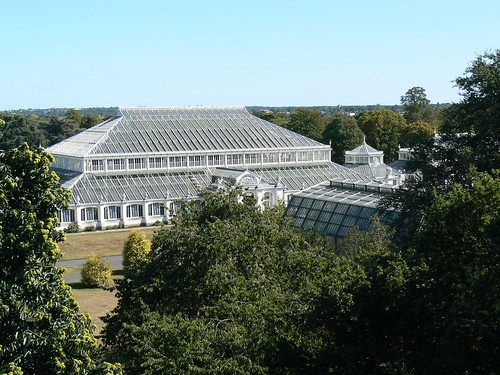
Cue Kew

It was a while since we last visited Kew Gardens, and all else aside, we rather wanted to see the Treetop Walkway, so we decided that the end of August Bank Holiday was a good time to make the trip - the end of summer and all that. And yes, it remains a marvellous set of gardens - a place to wander all through a summer afternoon. I've put Angela's photos of the day on Flickr.

The Walkway is impressive, too - an elegant piece of engineering allowing one to take part of one's walk in the park 18 metres up, near the level of the tops of the trees. (Warning to potential visitors; the lift appears to have some kind of long-term problem. Personally, I don't find an 18 metre staircase a problem, though.) Funnily enough, this was one thing that made us consider coming back in late autumn or winter, when the leaves are down; the view it grants is currently of a lot of foliage, with just a glimpse of some buildings (including the Wembley arch). That's nice, but in a few months, it may allow some really impressive views across London. The plantings could be interesting in winter, too.

But Kew Gardens - an admirable scientific institution (currently celebrating its 250th anniversary) does feel obliged to play up the botanical education aspect. Access to the Walkway requires one to walk through an underground display centre with lots of stuff about tree biology, which is fine, but let's face it, is mostly going to be ignored by most of the visitors. It's a three-way science vs. recreation vs. commerce clash, too, when you consider the (fairly classy) gift shops clustered round the main entrances. Oh well, put it down as dynamic tension (which must be hard work).

Tuesday, August 25, 2009

Playing the Roundhouse

In a certain spirit of seeing what the fuss is about, on Monday the 24th, we made our way to The Roundhouse in Camden to look in on David Byrne's "Playing the Building" installation. For those who haven't heard, this consists of an old pump organ console, gutted and wired up to assorted noise-making arrangements around the (currently largely empty) Roundhouse building - along with a sign on the floor saying "please play". Being British, visitors queue up to tinker with the keyboard for a few minutes each, producing assorted clangs, buzzes, and whistling noises from all around the structure.

If nothing else, it was a fine excuse to appreciate the structure of the building, which is a great old bit of Victorian industrial architecture, re-purposed to good effect in the late 20th century. Byrne's installation turns it into a whistling and clattering void, but it's not so vast or so empty as to be intimidating. The circle of cast-iron pillars supporting the part-glazed roof divide and define the space, and the other visitors - of whom there were plenty when we were there, but not a crowd - create the feeling of an amiable public event.

But if part of the point of this project was the democratization of creativity, well, I think it backfired slightly. Everyone who played with the keyboard - ourselves included - had great fun, but a few places ahead of us in the queue was someone who clearly had a decent grasp of musical technique, and who, with a little thought, turned the installation into a real working instrument. (It wasn't discernibly tuned, but it had at least as much structure as a full drum kit.) This display of deftness and competence earned him a brief round of applause from other people. Apparently, there were evenings when people were invited to bring their own instruments and jam with the building; if whoever nabbed the keyboard at these was skilled enough, the effect may well have been something seriously interesting and pleasing to the ear.

*****

And then, afterwards, we wandered down into Camden, thinking to catch the tube - but, finding a bridge, we realised that we'd come to the Regents Canal, and we could stroll for half a mile along its banks to reach Regents Park. It was a reminder that London is huge, and contains much that merits visiting that I've always missed.

Theatre: The Comedy of Errors

Emmanuel College Master's Garden, 23/8/2009

Another day, another problem Shakespeare comedy. The problem in this case - the reason why this one doesn't get produced so much (I'd never seen it live before) - being of course that some people aren't sure if it's actually any good. It barely even makes it to the dictionary of quotations, after all. But the company from Shakespeare's Globe have not only tackled it; they've taken it on tour, in an authentic-practices sort of approach with a booth stage (a rectangular canvas box forming the back of the small, low temporary stage) and a cut-back cast engaging in much doubling up - albeit with costumes that mix modern dress and vaguely period-eastern-Mediterranean style (to go with some Arabic-style clarinet-based music, hookah pipes, and so on).

And hey, they had me convinced by the end that this early Shakespeare piece is worth seeing occasionally. It may be a farce that's labeled as a Comedy, but it turns out that Shakespeare could orchestrate a pretty decent farce when he wanted to (okay, borrowing hard from three different Latin sources); it's not Feydeau - a lot depends on someone who's spent several years searching for his long-lost twin brother not having the faintest idea why a town full of people might be mistaking him for someone else - but it raises quite a few laughs and has at least a touch of poignancy.

Not that this production tried too hard for the last, after an affecting opening scene. The doubling up included several major parts and both the pairs of twins who are central to the plot, which worked perfectly well until the climax, when they're finally supposed to be on stage together - and so the final scene saw life-sized cardboard cut-outs of two of the cast wheeled on to act as place-holders, while another actor, doubling the Duke and Angelo, spent a lot of time switching postures while talking to himself. The cast were slick enough to make this very funny, but it couldn't rise above the level of mock-amateur slapstick. Still, think of a touring Elizabethan theatre company, playing something originally written to entertain a bunch of drunken lawyers to a random audience of unlettered provincials, working with the resources they had available, and this was probably about right.

Mind you, on those terms, playing it in a University garden isn't strictly right - apparently, the University banned theatre companies. But on a nice day, with a picnic blanket and a production that was clever enough to make itself look convincingly rough-and-ready, who cares?

Saturday, August 22, 2009

Theatre: Measure for Measure

Cambridge Shakespeare Festival, 21/8/2009

And we finally got to catch a Cambridge Shakespeare Festival production this year, a week before the thing wound down. In Robinson College Gardens, too, which we hadn't seen properly before, and which turn out to be very nice for this sort of thing. And the weather, we earlier in the day, turned nice for the evening, if a little cool by the end...

Okay, the play. One of Shakespeare's more problematic numbers, of course, being technically a comedy but really not funny - this production did its best with the bawdy house inhabitants and other minor parts, but even that wound up being more about the flaws in humanity than about actual humour. The play ends in marriage or marriages, yes, but these are marriages as punishment. (Mind you, I do wonder if the thing worked for Elizabethan English audiences as a huge joke about Catholicism and Catholics, with their wacky un-English obsessions with sin and virginity and confession and absolution and all that. Is the Duke even a Catholic god, or at least a symbol of the Catholic church, all manipulative power and arbitrary forgiveness when it suits him?) It's a tough play to produce by Shakespeare's standards, but interesting.

I guess that the normal response these days is to see it as a story about tyranny and power, with the Duke as an arbitrary manipulator and his brother as a Puritan tyrant. This production, though, took a different line, treating the Duke as a hell of a lot less clever than he thought he was; he fumbled around attempting unsuccessful jokes and unwise tests of other people's attitudes, causing widespread unnecessary pain and really not understanding why Isabella gave him such a dirty look at the end when he tried to propose marriage to her. Angelo, meanwhile, just lacked self-knowledge, hurtling into his appalling behaviour because he didn't have a clue how people worked. Let's face it, this is a horrifically dysfunctional sort of family to have running your country on any terms; in this version, they were downright clueless. Vienna, one felt, was in as much trouble in the long term as in the short.

Technically, this was a punchy presentation, coming it at around two hours including an interval, and even losing one or two of Lucio's sharper lines that often grab the audience's sympathy. This Lucio was shaved bald and wearing white face-paint that made him look part clown, part syphilis victim, and part goblin; definitely one of the bawdy house crew, not a fallible but morally honest everyman. The quasi-comic bawdy house business also involved a leather-aproned, bare-buttocked executioner (just a small part on a cold evening, boom boom), a lot of shouting, and some weird free jazz noises from offstage that didn't help the clarity of the performance. Still, it was Shakespeare on a summer evening, as the shadows drew in and things became colder; Measure for Measure had the way of things all too well.

Saturday, August 15, 2009

Tuesday, July 28, 2009

Moon

So, D. Jones launches a promising career with a tale of alienation suffered by a solitary astronaut...

"Planet Earth is blue, and there's nothing I can do."

It is nice to see someone attempting a lightly updated stab at a '70s-style "thoughtful SF" story, complete with model-based effects rather than CGI. It's not really very hard SF, despite the early reference to He3 mining to prove that somebody has read some popular science in the last decade; the movie mostly depends on the usual middleweight SF blend of implausibly advanced handwaved technology (to drive the plot) and other technology that's barely changed since 1965 (to keep the plot on track and the special effects budget down). Moderately regular SF readers (or even viewers) will guess most of what's coming after about twenty minutes, and the film doesn't really pretend to be a mystery - the big reveal, such as it is, comes about half an hour in - but I'll be polite and not give away too much. I will just note that, for an operation that's being run on a tight-fisted budget, Lunar Industries has constructed a remarkably spacious base, and even shipped out an old leather armchair for no clear reason, and no, neither is ever explained.

For that matter, there's little or no attempt to convey the fact of lunar gravity, and no consideration of communication lags over Earth-Moon distances. But, you know - white corridors, clunky spacesuits and lunar rovers, existential angst, no guns. Heading back to 1970, in a good way, means taking the clunky with the cool. Young Jones clearly has a brain as well as useful friends; his career may be worth watching.

Expand, Contract (10)

Well, the contract for GURPS Alchemical Baroque has come back, and I gather that the manuscript is being peer-reviewed, while Kromm has passed the revised first draft of Dungeon Fantasy: Clerics, so that should also be getting some third-party consideration shortly. And I can get on to Dungeon Fantasy: Summoners.

There are some small delays with some other stuff from way back, but hopefully they'll be dealt with shortly. Not my worry just now, anyway.

Monday, July 20, 2009

Theatre: Troilus and Cressida

Shakespeare's Globe, 18/7/2009

Call me a bit middlebrow, but I really do enjoy plays at Shakespeare's Globe, definitely including their "original practices" productions. The atmosphere is unique, with a combination of intimacy and theatricality; I don't know if the designers and directors have really recreated the authentic Elizabethan format, but they certainly come up with something. But we'd not been for a while, and we left booking this until a few days before, so we had to take "restricted view" seats.

And so, after a quick early dinner at The Real Greek, just down the road (the first time we'd tried this small London-based chain - not at all bad, and eminently suited to the need of a quick bite before the play), we found ourselves up on the highest level, almost behind the stage, and looking down on the heads of the cast and squinting sideways at the musicians. Actually, though, this worked pretty well; the wraparound audience is sort of much of the point of the exercise. I wouldn't put anyone off from taking these tickets.

Now, confession time; I don't think that I've ever seen a production of Troilus and Cressida before, though I think that I read it back at school. But then, one doesn't get very many chances, and looking up the history of the play, well, one wouldn't have had any for most of the period since it was written. You can tell that this is considered minor Shakespeare; it only has a handful of resonantly oft-quoted lines.

"Time hath, my lord, a wallet at his back, Wherein he puts alms for oblivion ... Wars and lechery ... Generation of vipers ...."

Gosh, Shakespeare was in a sour mood when he wrote this one, wasn't he? Not King Lear life-is-pain, the-gods-don't-care tragic, just life-sucks-because-people-are-idiots deep-seated annoyance. I rather wonder if he'd be out drinking with a few veterans of the Dutch wars for a few nights. I do like the idea that Achilles is somewhat based on the recently-fallen Earl of Essex, who was certainly compared to the "classical" Achilles when he was at his height of accomplishment. The play's Achilles is enough of an egomaniac sociopath glory-hound to fit my impression of Essex. (I'm not sure why this version had the play's only Welsh accent, though.)

Or perhaps, not knowing the play so well, I'm being influenced too much by a modern director's interpretation. The play's contempt for the business of war-fighting has evidently made it very much a piece for the post-1914 world, and it's doubtless impossible to avoid modernising much of it. The depiction of Cressida as a desperate victim of a male-dominated, militarised world, scrabbling to survive while being treated as property, while plausible and moving, may not have been entirely original practices. But then, this production interpreted that term fairly broadly; the fairly authentic-looking Hellenic arms and armour wouldn't have been very likely in the Elizabethan era, I think. Still, the designer and armorer had some neat (if arbitrary) ideas, giving the Trojans curved kopis-style swords and bucklers, while the Greeks had straight gladius-style blades and pelta-type crescent shields. I think that the idea was to give the audience back their own vague ideas about the setting, just as would have been the norm in Shakespeare's time; along with the warriors in skirts and Hellenic helmets, there were the women in floaty white nighties, sometimes with arbitrary cutaway panels. It mostly worked, although Helen's high heels were a bit distracting. The fight scenes were a touch stylised, sometimes going into slow motion, but given the numbers involved and nature of the stage, that was probably a necessity.

Anyway... I think that I can also see why this play was tagged as a history (rather than a tragedy or a comedy), perhaps even by Shakespeare himself. Not that it fits with the rest of his history cycle, of course, but the sense that it's re-telling an existing story to make a complicated point about the subject, and letting the messy complexities of the story just lie there rather than being resolved, because that's just how they are, not wrapped up in a neat plot. (Although not being an English history, and not featuring anyone with any sort of blood relationship to the Tudors, perhaps lets Shakespeare be more cynical than the other histories normally manage.) Actually, it's a rather untidy plot; the nominal protagonists more or less disappear by the end, as the attention shifts to the death of Ajax and the war lurches on, rolling over individuals. All this open-endedness and cynicism maybe sit oddly with the somewhat carnivalesque atmosphere of a Globe production, too; the (historically authentic) closing jig ends up feeling anomalous (although I don't know how such things work when the Globe does Lear either). But one has to wonder how Shakespeare's own audience took this thing, too (this being, one gathers, even less known than for some of his other works), and I can't think of a more enjoyable way to be confronted with such questions.

"like a treen in a disabled spaceship"


We decided to head up to London on Saturday the 18th - for a primary reason that will be explained in my next post - and we decided to take in a fairly small exhibition that we'd missed previously; Dan Dare and the Birth of Hi-Tech Britain, at the Science Museum. Actually, this turned out to be only a relatively little bit about Dan Dare - a case or two's worth of original art, a display board about the Eagle comic - and mostly about British technology in the '50s, with some imagery borrowed from the Eagle; not just Dan Dare strips, but cutaway illustrations of various bits of noteworthy technology of the time.

Still, this did illustrate two things; first, that the imagery of the comic strip was to a greater or lesser extent influenced by the big technological news stories of the day, and second, that the cutaway illustrations of Stingray and the Thunderbirds and such that decorated the TV21 comics of my own '60s childhood were actually fantasticised - and I'd have to say, thus debased - imitations of the Eagle's attempts to provide actual education. (For that matter, Doctor Who's Daleks, and in particular their TV21 incarnation, owed a significant amount to Dare's Treens, just as Doctor Who in general came to owe so much to Quatermass, especially in the '70s.) The museum had a point about the birth of "Hi-Tech Britain" taking place in that decade.

But that leads all too easily to another point. The problem for an exhibition like this, I fear, is that it has to deal with the persistent scent of failure that hangs over its subject-matter. The Hi-Tech Britain of which this exhibition speaks meant a motor industry whose management and workforce alike were all too stuck in old ways; it meant Comet airliners which crashed, and lost us that crucial lead to Boeing; it meant shiny new diesel and then electric trains, running on essentially Victorian tracks. There was some brilliance there, but too much of it was necessary ingenuity, improvisation around ingrained habits, bad decisions, and the problems of a country still recovering from its involvement in an expensive war. The exhibition was fun in many ways, but it was hard to avoid a sense of melancholy, induced not only by stories of make-do-and-mend shabbiness, but by a huge sense of opportunities missed - a melancholy not, I think, intended by the curators. This is the Science Museum, not a museum of social history, after all.

But not only is Dan Dare not flying the spacelanes in our defence, he's never going to, whatever may happen in space research. We're unlikely ever to see his sort again, and perhaps a big symptom of Britain's problems in the 1950s was the idea that the hi-tech future would lie with a square-jawed pilot who wouldn't have been out of place in the Battle of Britain, backed up by a comedy Yorkshire sidekick and a gruffly paternalistic staff officer. Still, the exhibition gets full marks for presenting the evidence.

Friday, July 17, 2009

Concerning Evolution

The Fitzwilliam no doubt thought that, as Cambridge's main museum, they really ought to do something to mark the Darwin bicentenary. However, they're not a museum of science, and anyway, that side of the man's life was already likely to be covered by larger institutions. So they hit on the idea of doing something on "Charles Darwin, Natural Science and the Visual Arts". The exhibition (entitled "Endless Forms") proves that it was a pretty good idea.

It starts with a small room of scientific sketches and illustrations, largely tied up to the Beagle voyage and Darwin's early education, which is mostly just a palette-cleanser - although it told me that Darwin got to attend a lecture by John Audubon in Edinburgh, which I hadn't heard before - and then one enters a bigger room and the fine arts stuff cuts loose, not least with a rather good portrait of the man that I again hadn't seen before. The main theme at this point, though, is basically art in relation to deep time and nature; Victorian painters looking at landscapes through eyes educated by new (though sometimes pre-Darwinian) insights of geology and paleontology. Seen in this light, the paintings here, mostly seemingly innocuous if often romantic landscapes, reflect a time of transformation - a fact only emphasised by the presence of a couple of attempts to paint scenes from just before or just after the biblical Noah's flood.

Other themes follow: "Struggle for Existence" (artists' responses to the whole Victorian social-pseudo-Darwinian "life is tough" idea, complete with a Landseer fighting stags painting), "Animal Kin" (mostly about Darwin's studies of emotional expression in humans and animals, and making the interesting point that Landseer's emotion-laden paintings of animals, which seem so drippy to modern eyes, may actually have embodied the then-radical Darwinian idea that humans and animal had more in common than people liked to think), "The Descent of Humankind" (illustrations of past-Darwinian Victorian anthropology, sometimes veering into uncomfortable areas of racial stereotyping, but also including one fabulous, quite modern-looking 19th century bust of a beautiful African woman that must surely have seemed downright shocking in its day), "Darwin, Beauty, and Sexual Selection" (a slightly tentative and uncertain look at the ideas about beauty and feminine influence which arrived in art from Darwin's work on sexual selection, but hey, you get a rather strikingly odd Tissot to look at), and "Darwin and the Impressionists" (yes, it seems that some of the Impressionists read Darwin; I can't see that his direct influence was huge, but there was evidently some). There's also a small display of photos of portraits of Darwin himself at different ages, showing that (a) he looked grumpy sometimes in his early middle age, and he knew it, and (b) he matured into the downright Leonardo-esque image of the bald sage.

And boy, the curators have been busy with this show, presumably calling in some favours as they went. There are paintings and sculptures from all over, chosen to illustrate the themes but often fascinating in themselves. For a free exhibition, it's stunning. Highly recommended.

Friday, July 10, 2009

Expand, Contract (9)


The second of my four new Personnel Files PDFs, Wild Justice, is now available from e23.

Saturday, June 27, 2009

Recent Reading: The Starry Rift: Tales of New Tomorrows

edited by Jonathan Strahan

Original anthologies of SF short stories seem to be a bit of a rarity these days, perhaps due, I gather, to some catastrophic misjudgments by publishers a couple of decades back. However, my taste for moderately literary SF was initially nurtured by some good anthologies (Out of This World, if you want the series title that comes to my mind), so I'm quite prepared to encourage such things.

And, okay, I discovered that this one had original stories by both Greg Egan and Neil Gaiman in it. Anyone who wants to know about my tastes should be able to deduce enough from the effect that those two names can have on me.

I got the impression from somewhere that this collection is aimed at the slightly younger end of the market, and while that doesn't seem to be stated anywhere in the book, it's believable. The stories are light on sex or gratuitous darkness, and many of them have youthful protagonists. The dearth of gratuitous splatter could also be explained by the simple fact that this is an SF collection, and Strahan seems to have been largely successful in keeping his contributors to that brief, which makes a pleasant change from some "original stories" anthologies. Not that everything is saccharine, mind; Garth Nix's "Infestation" is comparable to, say, an episode of Buffy for its gruesomeness, while throwing in some stuff about religion that's left for the intelligent-teenage reader to work out from broad hints. Mostly, though, this is a collection that explicitly takes '50s magazine SF as its model, and proves that one can do intelligent modern stuff within that framework.

Although it must be said that writers who cleave too closely to the model can come a cropper. I've never been a big Stephen Baxter fan, and his "Repair Kit" here shows how his emulation of the classics is one of his worst habits, all hard SF puzzle story clunkiness with too little of the formal ingenuity and none of the ironic flair of his stated model, Robert Sheckley. Nor does the Greg Egan story, "Lost Continent", quite come off, despite not being very much of a '50s pastiche; Egan spots a very interesting SF metaphor in the painful realities of the modern world, and supplies some admirable compassion to the story which uses it, but the metaphor never becomes quite concrete enough, never strengthens the story by virtue of distancing estrangement, while at the same time, its presence weakens the story as a depiction of real-world injustice. And the modernity is sometimes incomplete; Walter Jon Williams's "Pinocchio" has some interesting ideas and good characterisation, but doesn't work through the implications of the transhumanist technology of its setting; bodies can be swapped for less than the price of a bicycle, death is temporary, international travel is cheap - but mostly, the world looks and feels like a cheerful version of early 21st century California

The Gaiman story, "Orange", is fun, if slight, by the way, as Gaiman tends to be when writing quick pieces to fulfill a promise to a friend in the business. An account of an incursion of strangeness into reality, told entirely in the form of answers to questions which the reader has to infer (although that's not hard), it achieves its goals, if not a lot more; by the end, it's at least quite sweet. The other stories are generally pretty good; Margo Lanagan's "An Honest Day's Work" is odd and disturbing (in a good way), for example, while Cory Doctorow's "Anda's Game" continues Doctorow's interesting and worthy, if quixotic, moral reinvention of the SF canon.

So, yes, this book is definitely to be encouraged. It's probably way out of its time, but maybe it'll help keep the SF short story flame alive for another generation.

Expand, Contract (8)

I've negotiated a small delay in the delivery dates for my GURPS Dungeon Fantasy manuscripts. Things are a bit hectic round here just now. Hopefully, this won't have much effect on the publication date.

Sunday, June 21, 2009

Expand, Contract (7)

The signed contracts for GURPS Alchemical Baroque went in the post yesterday. Yes, this is my chapter from GURPS All-Star Jam 2004, updated for GURPS 4th edition and very slightly expanded for e23 publication. Hopefully, it'll move along fairly quickly now, especially as the first draft is already done.

Thursday, June 18, 2009

Diary of a Holiday, 2009 (3)

June 16th: Sunday in the Park With Angela

First off – well, after breakfast – we established that the local companies running tourist boat trips from the river up to the Canal du Midi don't run them before midday on a Sunday morning this time of year. (The leaflets and flyers take some decoding.) Oh well, Plan A-2 – a quick visit to Les Jacobins, the Dominicans' first-ever permanent convent. (More cunning placement of orthodox theologians to keep an eye on all these Cathars.) This is one heck of a pillared hall, pretty empty these days except for, well, just the tomb of St. Thomas Aquinas. One feels that one should pay one's respects to the Angelic Doctor. Muttering that one is surprised that they could fit him into that little box probably counts as too much of a scholastic in-joke; wondering what the Dominicans were doing playing host to someone as unorthodox as this ... is merely forgetting that one century's dangerous free thought is the next century's saintly orthodoxy.

Then, Plan B. This involves a brief wander down through the southern side of the town centre, down where the Renaissance mansions begin to mingle with Victorian and even twentieth century construction and planning, and then into the Jardin des Plantes, which here means the main public park – and a fine park it is too. But we're there for a reason, which is Toulouse's Natural History Museum, recently reopened after a ten-year refit.

And gosh, they've take the opportunity to make it handsome. This may be the most stylish museum I've been in for a long time, all subdued lighting and glass panels in the floor and thematic organisation. Even working of necessity with a rather Victorian collection of exhibits from before the refit – lots of faintly embarrassing stuffed animals and mounted butterflies – they've taken the opportunity to use them to illustrate modern themes like scientific categorisation and “deep time”. Not speaking the language of the labels (which are in any case only illuminated by that subdued lighting), I have to skim rather, but I know lots of nifty fossils and stuff when I see them. Even if the baryonyx and T. rex skeletons were actually casts of things held elsewhere. The place also has a spiral-layout garden full of plants categorised by the uses humans put them to – with most of the herbs and spices categorised as medical plants, which seemed kind of old-fashioned-French – and we grabbed a decent light lunch in the attached cafe.

Then we moved on, north and then east to see the local stretch of the Canal du Midi from its banks before turning back to finally see Toulouse's cathedral (traditionally overshadowed by the basilica previously mentioned, including on our list of priorities) It has to be said that this is a curious mess, what with one whole section being off-centre from the rest – the consequence of a medieval budgetary screw-up, apparently.

And then, after crashing out back at the hotel to let the heat of the day subside, we had to find some dinner, despite some restaurants being shut for Sunday evening. After some faffing about, we settled on a little backstreet place serving platters of stuff. But this is France, so such a pocket-sized place can draw its stock from the excellent local markets and patisseries, even if they have no real kitchens of their own; those platters can include half-a-dozen varieties of really nice cheese, and desert can mean a rich chocolate cake/tart served with a smooth crème anglaise. Yes, thanks – the choice worked fine.

June 15th: To Viollet le Duc's Medieval Theme Park

Our train was scheduled for 12:20, so after we checked out of the hotel, we left our bags there and set out for a last look around Toulouse. Then Angela stumbled stepping off a curb, and twisted her ankle. So we made a slow way back to the hotel, and called a taxi to get us to the station. The taxi driver asked where we were going, and warned us – through the language barrier – that there were problems with trains to Carcassonne. He was right; our 12:20 train had turned, curiously, into a 12:15 coach, which took us on a tour of the shabby districts in which French small-town railway stations always seem to be built. It was turning into one of those days.

Fortunately, it wasn't as hot as some recent days, so when transport from Carcassonne station to the old city area proved sparse, we were actually able to walk it – slowly – without completely losing the plot. We checked into the Du Pont Vieux, which turns out to be the most, umm old-world-picturesque hotel yet this holiday, albeit with the biggest room with the best view (of the Carcassonne city walls, yes), and then went off to see the old city and catch a late lunch.

On entering the old city, we were both reminded of Mont St. Michel; a twisty maze of medieval cobbled streets, lined with tourist trap shops and full of tourists. Still, it is dead picturesque. An omelette and a beer later, I was feeling a bit more human, and we took some time to look around the streets. Like I said, picturesque, and to be fair the tourists are being trapped with quite a lot of decent-looking restaurants (one of them offering four different varieties of cassoulet – look, it's a nice bean stew, and I get the thing about local culinary rivalries, but this is a bit silly – bean stew with fat meat is still bean stew), and if you wander up onto the inner ramparts or out to the outer, the views out over the town and the fields beyond to the distant hills are superb. Inauthentic as it may be, the place lives up to its rep.

Angela's ankle was slowly getting better, but we didn't want to wander too far from the hotel for dinner, which meant that we ended up eating Italian. (With a bottle of decent French rose.) Oh well, never turn down good tiramisu.

June 16th: Views of the Area

First thing, we headed back up to the old city, with intent to see some of the obvious things that we'd not managed yesterday afternoon. The castle didn't open until ten, so we strolled down to this place's basilica (which used to be the cathedral until that status got shifted to a church in the Bastide St-Louis, across the river, just a few years before the renovation of the old city began – the place must've been a real mess by then, people were making archaeological discoveries in the cellar). Once again, it turned out that architecture had emerged from budgetary screw-ups in centuries past, to interesting effect this time; when the French crown grabbed the city off its maybe-heretical counts, they ordered that the romanesque church be replaced by something gothic, then ran out of money before the demolition was complete. So one wanders down a restrained Romanesque nave, and the whole thing suddenly explodes around you into a Gothic transept, complete with some gorgeous period (or in bits, Victorian-recreated) stained glass.

Anyway, the castle. This proved well worth the price of admission, not so much for the castle itself – which is fine, but I've seen plenty of medieval castles back in Britain – as for the views from the walls and towers. In one direction, there's the lushly restored/recreated/imagined old city, and in the other there's the scruffier and dustier surrounding buildings and beyond them the Bastide and the green valley of the River Aude. Standard southern French domestic architecture – rendered walls and pantiled roofs – doesn't look so good close up when it's a bit neglected, but from above, panoramically, it can be gorgeous.

Lunch, in one of the old city's many restaurant gardens, was more salad and stuff, and then we took a stroll – being careful of Angela's still-recovering ankle – into the Bastide. This turned out to be rather unremarkable, but we found our way up to the Canal du Midi, which runs through the town, and in general it's-a-holiday mood, booked ourselves a boat trip.

Our timing for this turned out to be immaculate, as shortly after it started, so did the rain. But the boat had a canopy, so we sat back, watched the banks go past (initially meaning dull industrial buildings, but soon turning very green), and listened to the trilingual commentary. The Canal du Midi really is one of the unknown wonders of France; 240 kilometres of 17th century engineering, linking the Mediterranean to Toulouse. Okay, I was especially impressed by the deep cut through solid rock that we passed through shortly after we started, and I subsequently discovered that this was 19th century engineering, dating back to a slight re-routing that moved the canal up to the town, but still. It sounds like the hydraulic engineering which brings water from the local mountains to keep the canal topped up is the really clever part.

Oh, and dinner. We really felt obliged to sample one more cassoulet before we fled the south, but we also wanted to treat ourselves. So we tried Au Comte Roger, back up in the old city. This was described as combining local standards with gastronomic refinements, which at least in the case of what we ordered, turned out to mean wrapping delicate starters and fairly restrained desserts around seriously generous quantities of (excellent) cassoulet as the main body of the meal. I carefully left some of that – well, some beans and maybe a bit of pork – in order to be sure of having room for dessert, but I could probably have managed more.

(And interestingly, even this sophisticated French restaurant seemed to think that a “cappucino” should have whipped cream on the top, a peculiar idea presumably resulting from the need to distinguish cappucinos from what many French places serve when one orders a cafe au lait. Me, I thought that a proper French cafe au lait involved a big cup and a lot of not-much-frothed milk. Hey ho, I'm turning cranky in my old age.)

June 17th: Retracing Tracks (1)

And so we start for home.

We had an alarm set for 6:30am, and arrived at the Hotel du Vieux Marais in Paris about twelve hours later. (Not bad, but fairly basic facilities for the price, and this is evidently the hotel refitting season over here and they haven't quite finished refurbishing our room yet. Note; the picture on that 'Web page doesn't show the hotel.) After checking in and resting a while, we decided that crepes would suit us again, and after a bit of wandering, we ended up in a place near the Beaubourg. Which basically wrapped up the day.

June 18th: Retracing Tracks (2)

Morning in the northwest side of the Marais... Hey, Le Pain Quotidien is just round the corner from the hotel. So that's breakfast sorted. (I like baguette+croissant+coffee+orange juice as much as the next man, but it's nice to find a place here that offers some alternatives. And which does killer walnut bread and proper cafe au lait.)

The train isn't until after 3, though, so once we're packed and checked out, we consider our options. It's a while since we've been up the Eiffel Tower, so we set out in that direction on the off chance. When we arrive, though – well, the queues for lift tickets are what you might really expect on a dry morning in June, and the signs are flashing warnings about possible overcrowding on the upper level. So we turn aside and take a stroll up the Seine instead.

Incidentally, the base of the Tower is a major focus for Paris's current professional panhandler infestation. (There's someone somewhere in the city conducting master classes in asking “Do you speak English?” in a wheedling tone.) For that matter, just as we were getting to the Tower, we were subjected to a real live excuse-me-did-you-drop-this-implausibly-large-gold-ring-which-I-amazingly-just-picked-up. And there were all the ambulatory hawkers flogging dubious souvenirs of the tower, although at one point something – I'm not sure what – made all of them break and sprint in the same direction.

Anyhow, the walk back took us past the left bank end of the Pont Alexandre III, reminding me that Paris has a few monumental vistas that only get footnotes in the tourist guides because there's not much to visit there. (Though the Air France signs on one of the key buildings in this view might spoil the tone, unless you assume that a national carrier is essential to la gloire. Then it was over the Pont des Artes and time for a quick lunch, and hey, we haven't been to L'As Du Falafel yet this trip.

Mmm. Falafel.

Which does give us easy time to pick up our luggage from the hotel and use the last of our carnet of Metro tickets to get to the Gare du Nord.

Breakfast and lunch in Paris, dinner in Hertfordshire, not much stress. I could get used to this stuff.

Sunday, June 14, 2009

Diary of a Holiday, 2009 (2)

June 13: Heresy, but Strikes Cancel Decadence

Albi is a small-ish French town with a centre made up largely of recycled brick-built Renaissance town houses on a medieval street plan. It also has some stunning views across its river, often involving its cathedral, which is also brick-built.

Whereas most great churches have to be read as works of faith or of art, this one sits there as a naked assertion of power. It looms like a fortress, unembellished on the outside apart from some gargoyles and a completely irrelevant stuck-on Gothic carved stone canopy on one side (and it lacks any Romanesque grace); as Angela commented, it could have been built in the 1930s in a fit of Art Deco sparseness. But it goes back further than that. Funded by the proceeds of the Inquisition, plonked down to assert Catholic authority amidst this notorious hotbed of heresy, it's a serious piece of building.

Until you go inside, anyway.

The stone rood screen, a mass of Gothic carving, at least fits the medieval theme. Likewise, the painting of the Last Judgement, lurking below the great cathedral organ, is a typical exercise in cheerful period religious sadism, and doubtless served to tell any lingering Cathars what was coming to them. But the trompe l'oeil painted decorations over most or all of the interior walls are just silly. Apparently, they were financed by the local woad merchants who made the town rich at one time and who also built most of those Renaissance mansions, which at least might explain the amount of blue involved.

Anyway – while the more offbeat wood-and-brick mansions, and the views across the river from either side, and the formal garden of the old bishop's palace, are all worth seeing, there are basically two plausible reasons to take an hour-long train ride from Toulouse to Albi. The cathedral is one; the world's most comprehensive collection of the works of local boy wonder Toulouse Lautrec would be the other. Well, before setting out on that journey, we'd been wandering round Toulouse, killing time before our train, when we witnessed what the French call a manifestation – a good old (if peaceable) political demonstration, complete with a small contingent of bored-looking cops observing with perspex shields at their feet, and unconvincing punk band playing from the back of a pickup van. We left them to it and caught our train. Then, when we arrived at the Toulouse Lautrec museum, we were reminded that such things have implications. It was shut because the public servants who staff it were on strike.

Bugger.

It was a hot day. We went off and drank some more liquid. Fortunately, the cathedral was our actual identified reason for going, and the town in general was sufficient bonus.

Evening, back in Toulouse: I'd had a minor yen for some moules, so on the basis of having seen it and one bit of online research suggesting it was good, we hit a local seafood restaurant. It was indeed good, and the moules were amazingly generous (as were the profiteroles). Some stuff does work out.

Friday, June 12, 2009

Diary of a Holiday, 2009 (1)

June 9th: To Paris

Departed St. Pancras at 12:29 – our first journey from the new Eurostar terminal, and very slick it is too. I was even more impressed by the sight of the Dartford Crossing about fifteen minutes after departure; those trains can move. So we reached Paris a couple of hours (and a bit) later, grabbed a coffee at the Gare du Nord, and then made our way to the Hotel Jeanne D'Arc. This turns out to be a bit scruffy round the edges – there seems to be some refurbishment work going on at the moment – but it's certainly come up in the world since we first stayed here, twenty-five years ago. Symptom of its location in the Marais, I guess.

Anyhow, we checked in, and then took a walk, down and over the river, along past Notre Dame and back to the right bank, and then as far as the Louvre before we turned round and headed back to the Marais. Dinner was at Pitchi Poi – yeah, eating East European (herring salad, duck casserole, a weirdly nice poppy seed cake called “Nuit Profonde” that was as dark as its name implies) on one's first night in Paris, but we've been there before and we happen to like it.

June 10th: In Paris

One advantage of staying in a backstreet hotel (and in a room which looks onto a light well) is that it's quiet, especially for central Paris. So we slept well, thanks, and headed out for breakfast at a branch of Le Pain Quotidien – some streets away, but this is another taste we've developed in this city. (Though you can now get their hazelnut spread in London – well, from their branch in exile in St. Pancras.) Then we decide what to do with the day.

Contemplating the map, we realise that we've never previously got around to seeing the Jardin des Plantes, so we head east along the Left Bank, skirt a Victorian (?) statue of Lamarck with a plinth proclaiming him the discoverer of the principles of evolution (yes, well), and discover a rather nice botanical garden. Definitely a working site (associated with a museum/research institute), not generally overly pretty or cleverly laid out, but well labelled and with a nice rose garden and an even nicer alpine garden. Emerging from there, we see the central mosque of Paris – which turns out to have a restaurant attached, so lunch involves tagines and mint teas. (Look, we did eat French at breakfast.) Emerging from that, we discover that the morning's occasional showers have developed into a full-blown inundation – so we find a metro station and head back to the heart of the city.

After we've spent a little time browsing in the shops that now lurk under the Louvre, we find that the rain has now let up enough to permit a stroll round the Left Bank. That leads to a beer in a brasserie on St. Michel, and by now we've walked enough that heading back to the hotel to put our feet up seems like a good idea.

The rain does then let up a bit, but we don't trust it and we seem strangely to be feeling quite well fed, so we go looking for a creperie for dinner. The first we find is Page 35, which turns out to count as a good choice. Hmm... I still haven't had any French wine, though. (I assume that, when ordering from a Breton menu, cidre is indicated. Well, tomorrow should be different.

June 11th: To The Pink City

First thought for the day; Does anyone in this country, when in need of an English translation, for a menu or a hotel brochure or whatever, actually think to employ anyone who actually speaks English?

The first part of the train journey took us through a few hundred miles of pleasant enough French countryside, but with few sights to grab the attention apart from one big bridge as we approached Bordeaux. The second part, up the valley of the Garonne, promptly plunged us into a landscape of vines. I think that I'd better get around to that French wine tonight.

We reach Toulouse at 5 pm, and find the Ours Blanc Victor Hugo with only a small struggle with the non-rectilinear local street plan along the way. This is another fairly basic hotel, but comfortable enough – and as we've shifted a few hundred miles south, “fairly basic” now encompasses air conditioning. (This one also runs to free WiFi, in theory. Practice may be another matter; taking my netbook down to the lobby eventually seems to help.) Anyway, we drop some stuff off and head out to look around the town.

Second thought for the day, from Angela: The trouble with these medieval streets is that people have nowhere to put their wheelie bins, really.

But in truth, the place is very picturesque; in a medieval-plan, student-infested sort of way. The “pink city” tag evidently refers to the local fondness for brick as a building material, incidentally. We get to see the basilica and the river, and then decide to take our guide book's word about Chez Fazoul for dinner.

Oh yes – we're in France. So a little backstreet restaurant in a student town naturally does a really unctuous cassoulet and a delicious pear tart.

June 12th: In Toulouse

Morning: Breakfast at a table outside a cafe on the fine town square, then a stroll that takes us round the Basilica of Saint-Sernin. I've seen big churches, and I've seen Romanesque, but a church this size that's managed to retain its Romanesque purity, without Gothic impositions, really is something fairly new. It feels like a real piece of the early Middle Ages.

And there's a covered food market opposite the hotel. French provincial towns do love their covered food markets. I can see why.

A Bit Later: The interior of the basilica turns out to be as elegant as the exterior, with the odd bit of very old art for interest. We weren't planning to pay to see the collection of medieval reliquaries anyway – we're not great fans of medieval carving and such – but I'd swear that seeing the entrance to the exhibition area stirred the ghosts of of my Protestant ancestors to utter disdain.

On the other hand, we did pay to go into the Musee Saint-Raymond, nearby, which turned out to be better than the guidebook suggested, having not just a good exhibition about pre-Roman Toulouse on the top floor, but a pretty magnificent set of Roman sculptures from a local site on the floor below. I'm surprised this isn't publicised more. Anyway, we then took a walk down to and over the river, and found our way to Les Abattoirs.

Which isn't as bad as it sounds, because the town's old abattoirs have been cleaned up and spruced up to high-vaulted, red-brick magnificence, and converted into a gallery for exhibitions of modern art. I'm not really qualified to comment on what we saw there; some of it affected me, some didn't, but I can't analyse the subject with any credibility (especially as the labels and any explanatory notes were all in French). I will say that, at the time of our visit, they had some very appealing aboriginal art, and some installations that were at the least striking or fun to wander round; also, some installation artists lean rather hard on the use of “disturbing” ambient sounds, which seems to my ignorant judgement like it's turning into a cheap cliché.

Oh, and the gallery has a really nice cafe/restaurant attached. When we were done there, we crossed the town, pausing to take a few pictures, and ended up feeling warm enough that the idea of taking an hour or two in the Musee des Augustins seemed quite appealing. Actually, it was a very good idea; this museum is a converted monastery, and the layout involves some cool cloisters and a peaceful central courtyard with a garden in it.

Oh, the museum exhibits? Well, there were some medieval carvings... And some mostly second-string but not actually bad 19th century paintings. And a number of Victorian academic sculptures, mostly on mythological themes (i.e. a lot of marble bottoms).

Dinner: Saveurs Bio, which despite what our guidebook says, turns out to be organic but not vegetarian. At least, there was poulet mentioned on the menu, and my main course turned out to include fish. Nice food, leisurely service no doubt related to local custom of one waiter per restaurant.

Friday, June 05, 2009

Expand, Contract (6)

My latest piece of work is now out: Transhuman Space: Personnel Files 2 - The Meme Team. I think that it works.

Oh, and I've had some line editor comments on Dungeon Fantasy: Clerics. That's going to take a little while to move forward to the next stage, though.

Wednesday, June 03, 2009

Of The Era

The specific which you have discovered is an aid not to memory, but to reminiscence, and you give your disciples not truth, but only the semblance of truth; they will be hearers of many things and will have learned nothing; they will appear to be omniscient and will generally know nothing; they will be tiresome company, having the show of wisdom without the reality.
- Plato, a couple of thousand years early.

Friday, May 29, 2009

Auld Acquaintance

One of the perks to getting a degree from Cambridge is supposed to be the chance to spot future famous people before they get famous. (At least, I assumed that was one of them.) It's worked kind of patchily for me - I think I got Ed Stourton to help out wit a rag week auction, and I have vague memories of a gratuitous stage nude scene from Stephen Fry. But these last few months - first, I discover that someone I knew from the Economics course was working as an adviser for Bear Stearns - and then there's Julie Kirkbride, who I noticed around the place occasionally...

Oh well.

Wednesday, May 27, 2009

Star Trek (the 2009 movie)

London, 25th May 2009, part 2.

I was never a huge Trek fan, I think. I watched it with the enthusiasm of a young-adolescent proto-geek when it first came up on British television around 1970, to be sure, and then I caught an episode or two when it came round again about 1980 and realised just how clunky it was. I didn't bother very much with The Next Generation, and if I liked Deep Space 9 - which I did - it was partly for having the courage to deconstruct and challenge so much about the Trek that went before. Likewise, I'm not any kind of J.J. Abrams fanboy - I never picked up on Alias, and I was comfortable enough giving up on Lost when it switched from terrestrial to paid satellite channels in the UK, suspecting it of being all flash and no substance.

Which is really just a way of explaining why I took a while to get around to catching this movie, and only really did so in the end to round off a day up in London. With no great commitment to the thing, I could enjoy it well enough as a contemporary Hollywood skiffy action movie, with chase scenes and space battles and ice monsters and stuff exploding. It also got bonus points for finding a cast who, in some cases, inhabited the personas of the original crew unnervingly brilliantly (while giving Uhura a serious job to do, so not all of the Galaxy Quest flashbacks were too painful). I could respect the time travel-based reboot as the smartest solution yet seen for a perennial old-media-property problem. (It raises questions about inconsistent depictions of the nature of time and history in Trek, but who cares? It also solves a basic inconsistency in Kirk's character, in Hollywood-conventional terms; why should the non-rebellious child of a successful career Star Fleet officer turn into a smug jerk with minimal respect for higher authority, albeit also an intuitive tactical wizard, like Kirk? The new Kirk now has Childhood Trauma to explain his jerkiness.) But oh my, the problems that occur to anyone when they stop to think about this movie for a minute afterwards.

Most or all of these have already been hashed out elsewhere on the Web (see, e.g., Twenty Sided), so I won't add to the geekery by listing everything I happened to think of in detail. Some of them may be covered when some kind of director's cut DVD appears (What's with the hole in the middle of Idaho? How long is the journey from Earth to Vulcan supposed to take?), some probably won't (the whole Planet Plotdevice sequence, with its perfect view of Vulcan and Scotty's long-range transporter and all), some are just so deeply embedded in the Trek pseudo-mythos that no one is going to touch them (How good is interstellar communication, and why doesn't Star Fleet issue direct orders to the Enterprise in moments of interstellar high catastrophe and why doesn't the Enterprise warn Earth about what's coming?), and some will only matter to people who know that pseudo-mythos well (How come any Federation citizens at this date know what Romulans look like?). But, well, really.

I've seen it complained that the original Trek was at least sometimes a drama about ideas, whereas this movie is all explosions and no thought, and I might sympathise with that - except that the ideas in the original series were generally pretty simplistic and clumsily handled, so it didn't hurt me to see them lost in favour of a lot better special effects. I guess I worry a bit more about movies in which people see dozens of their personal friends and billions of other people slaughtered in front of them, and get over it quite so quickly, but in the end, action movies are what they are; the Cosy Catastrophes of the video game generation. (And talking of video game style, what the hell is up with Romulan starship design? Naval architecture inspired by the Mines of Moria, complete with no hand rails?) If this thing generates sequels, I may well go see them, if only to discover what if anything Saint Simon Pegg of the Geeks eventually works out to do with Scotty. But it'd be nice if Abrams eventually decided to do something for people who think after the titles stop rolling. Not that I want the sterile puzzles and fake depth of Lost in Trek, of course, although that might be an interesting train wreck.

Points East

London, 25th May 2009, part 1.

Another day off, another couple of exhibitions...

Morning was Kuniyoshi at the Royal Academy. A lot of the prior publicity and posters for this had implied that it was much heavier on the action and mythic adventure than a lot of Japanese prints of the period - less of the elegant views of Mount Fuji, more of the gurning swordsmen battling giant carp - with a strong hint of the manga from a century later about it. And, to be sure, there was a fair bit of that; but there were also some lovely landscapes and a certain amount of rather strange humour. (Octopuses acting like popular entertainers of the period, anyone? Not to mention the phallus-shaped cartoon characters.) Still, Kuniyoshi came across as more cheerfully admitting to being part of the louche Floating World than Hokusai or Hiroshige. Or maybe that was just the way these images were presented. A lot of beauty, though, with a lot of oriental strangeness in it.

Incidentally, gamers might like to note that several of the pictures featured not only (gurning) samurai with swords, but also female figures with naginata. The samurai-class woman with that sort of combat training was evidently part of the imagery back then. I also loved the way that a lot of Kuniyoshi's historical images had to supposedly depict quite early events, because anything less than a few hundred years old was considered too politically sensitive in 19th century Japan - so he just depicted scenes that his audience might guess were really scenes from slightly later dates.

After lunch, it was on to the British Museum, to catch Shah 'Abbas: The Remaking of Iran before it ended. This was cunningly located in the upper levels of the old Reading Room space (with the windows blanked out to keep the light levels down), thereby borrowing a great domed space from a different culture to good effect for an exhibition about part of the Islamic world. The show itself was full of lush and gorgeous Persian art, while still conveying something about the history of the reign of Shah 'Abbas I (1587–1629). This, of course, had all too much of period despotism about it, being full of brothers murdering each other and the Shah killing the advisor who'd helped him depose his own father a couple of years earlier. The Elizabethan English adventurer who ended up at as a leading figure 'Abbas's court - and whose portrait crops up early in the exhibition - must have been very willing to live dangerously. Although doing comparably well back home could have been pretty risky, I guess.

The excuse to tie together the politics with the artworks was the idea that 'Abbas was consciously creating a whole new style for his reign - not just showing off dazzling wealth, but making a conscious break with the past. I'll take the experts' word for this, although it would have taken a far vaster exhibition with much more earlier stuff to show the novelty of these things. Incidentally, amidst the (rather faded) silk carpets and gorgeous miniature paintings, there were also whole cabinets of Chinese porcelain (often from a century or so before 'Abbas's reign), showing which off evidently counted as refined conspicuous consumption back then. Although 'Abbas apparently donated a lot of it to a Shiah shrine (which had to build a whole new building around the display niches for his gifts), possibly mostly to make way for all his new bling.

Two sumptuous exhibitions, two reminders of the richness of different artistic traditions. Mind you, lots of reminders of how much the associated cultures went in for sticking sharp things in other people (or themselves - one of them was samurai-era Japan, after all), too, but these days we can sit back and admire the great pictures.

Monday, May 18, 2009

Of The Season

"We know no spectacle so ridiculous as the British public in one of its periodic fits of morality."
- Macaulay

"A 'sound' banker, alas! is not one who foresees danger and avoids it, but one who, when he is ruined, is ruined in a conventional way along with his fellows, so that no one can really blame him."
- Keynes

Friday, May 15, 2009

Expand, Contract (5)

For those who are keeping score; I've just signed contracts for and GURPS Dungeon Fantasy: Clerics and GURPS Dungeon Fantasy: Summoners. And I've recently had sight of the (very promising) first-pass PDF of Transhuman Space: Personnel Files 2.

Oh, and I gather that Ars Magica: Tales of Mythic Europe, which has a bit by me, is now in distribution.

Monday, May 11, 2009

Concerning Explication

Living within easy reach of the Fitzwilliam Museum, I try to keep track of the various temporary exhibitions and special displays that often run there - and recently, we realised that we'd not caught the latest batch, so we dropped in on Sunday. They had four such things running; aside from a case with coins from Commodore Matthew Perry's personal collection (noted Victorian public figure had quirkish hobby, shock) and a room full of Chinese jade pieces from the neolithic to the modern era (some of them very nice indeed, but the display didn't seem to have much of a theme beyond demonstrating that jade has been important in Chinese art for a very long time), there were two that told me lots more stuff I didn't know, in somewhat excruciating detail.

The first was entitled "Kachofugetsu: The Natural World in Japanese Prints", and consisted of a collection of, yes, Japanese prints, mostly (but not all) showing themes from nature. Japanese print-making being the art it is, this was a pleasure to visit, and I was shown a few details that I'd never noticed before and found interesting, such as the use of print blocks carved to so as to add physical texture to the image. I was also told a lot of other stuff about things like metaphors and symbolism in the images and all the quotes from Chinese poetry. This is all doubtless necessary information for scholars of the subject, and a really amazingly smart exhibition design might have conveyed some of it in ways that would make it interesting to the general viewer - but I just felt that I was drowning in detail.

The second, two rooms away, was about "Changing Faces: Antony Van Dyck as an Etcher"; it turned out that Van Dyck didn't do very much etching, but yes, when he turned his hand that way, wow but the boy could etch. Mostly he did portraits, mostly of his fellow artists (and the artistic community in the Netherlands at that time was, one can be reminded, packed with significant names); many of these prints wound up in books of, basically, collected picturesof famous folks, a few years after he did them. Often, the creators of said books added background and clothing that Van Dyck himself hadn't included; he and they also added and corrected countless details at various points, as the exhibition labels were happy to explain. I may have come away knowing a little bit more about the craft and history of etching, but mostly, once again, I just felt overwhelmed. It's good to have one's ignorance challenged from time to time, but I couldn't really call these exhibitions overly friendly to the ignorant newcomer.

Still digesting these thoughts, I turned the TV on in the evening to catch part one of The Incredible Human Journey, which rapidly started causing the usual problems I get with TV science programmes these days - a lot of teeth grinding and a strong wish that they'd spend a little less time repeating the trivia and showing the presenter driving a car, and a lot more explaining some details. Dr Alice Roberts was shown trekking laboriously across east Africa and talking to (sometimes worryingly gun-toting) locals, accompanied only by an invisible camera crew, until she finally found the remote site where a past expedition apparently found the oldest known remains of modern humans - but what distinguishes a "modern human" from the various other human ancestors she talked about? What brought that past expedition to that so-terribly-remote location? Damnit, this is a science programme - could we have just a little bit of science? Later, Dr Roberts spent the night on her own out in the bush, protected from the prevalent leopards and hyaenas only by an ad hoc thorn scrub barrier, supposedly in order to empathise with the ancestral humans who'd have experienced the same thing - but we didn't really learn anything about what's known or believed about Stone Age life, with even the nature of the barrier that kept her alive skated over, and while we may have learned something about Dr Roberts's willingness to take risks in order to get five minutes of good film, these scenes with dangerous-sounding wildlife or dangerous-looking locals just drove me to cynical thoughts about BBC management risks assessments and insurance cover, and who aside from the camera crews may have been just off-shot or not far away.

To be fair, things got a bit better later in the programme, and I think I learned something about early humans' possible routes out of Africa across the Red Sea and up the southern coast of Arabia. I'll tune in again next week to see what else I can extract from the series. But the first half of the programme surely felt like a horrible warning about what you get if you wish for less detailed, more friendly explication.

At which point, I draw no conclusions, other than that I should give more credit to the creators of really good exhibitions and documentaries. There's a balancing act involved, and getting it right is harder than it looks.

A Camp: Colonia


In which is considered the question: Is Nina Persson selling out?

Well, not really. Anyone whose early work (with the Cardigans) mixed references to Emmerdale Farm with Black Sabbath covers is more or less permanently immunised against any accusation so naffly '70s. But a first couple of listens to A Camp's second album do rather suggest that it's short on the sinister-surreal edge of their first, cover art notwithstanding. A Camp used a lot of conventional-sounding instrumentation and arrangements, to be sure, but placed them behind Persson's dark or chilling or moving singing. This one just doesn't seem to have anything to match the bass-synth thunder of "Such a Bad Comedown", or as hook-laden as "The Bluest Eyes in Texas" - let alone as chilling as the Cardigan's similarly recent "And Then You Kissed Me", as smart as their "You're the Storm", or as potent as "I Need Some Fine Wine, and You, You Need to Be Nicer". And the loose theme of colonialism doesn't really seem to hold it together.

Still, it does have "Stronger Than Jesus" (Don't you know that love is stronger than Jesus?/Don't you know love can kill anyone?/Bring it on, wars and diseases...) and the mutant-'60s-girl-group style of "Here Are Many Wild Animals". I guess that Persson's self-possessed-masochist stance might begin to wear after a few more albums, but I'm still along for the ride.

Wednesday, May 06, 2009

Coraline

It's not actually officially released in the UK until next week, but the Vue up in Cambridge was showing previews - in 3D, even - so that was our bank holiday fun.

"It" being, of course, the stop-motion animated movie adaptation of Neil Gaiman's children's book of a few years back. A rich and colorful little number it is too, a brilliant cinematic-experience fantasy, all gangling limbs and well-judged subtleties of expression. Still, it's a stylised animation - an abstraction and a flamboyant sketch of Gaiman's story, which started more from realism. As a result, some of the characters and plot details become caricatures of their written versions, and some subtleties become reified (notably in the form of Wybie, the completely new character who serves as the cinematic manifestation of some of Coraline's thoughts and problems - a sounding-board and occasional device to assist the changed plot). At times, this broad-brush approach loses some of the book's subtleties; for example, where in the book Coraline's father's cooking merely sounds a bit under-trained and worthy, and Coraline seems to suffer from a child's annoying pickiness about her food, the film father produces goopy animated messes that would put anyone off. And where in the book Coraline's mother seems mostly busy and distracted, her movie version is downright irritable and snappish.

But please, don't think of me as one of those fannish monomaniacs who insists that every movie diversion from a printed source is some kind of sacrilege. (A foolish consistency truly is the hobgoblin of little minds.) On its own terms, as a 3D cartoon, it's a fine thing, well worth the price of admission - a modern-day treatment of the fairytale motifs of "stolen by the fair folk" and "be careful what you wish for". The use of 3D is superb, by the way, complete with semi-transparent surfaces and such; this is clearly already a pretty mature technology. It also interacts well with the model-based animation, which is embellished with more CGI-based techniques in a couple of appropriate places - first in the scene with the ghosts, and secondly where the Other Mother's house begins to disintegrate (very appropriately) like a virtual reality landscape. This makes one or two other moments, where things are animated in physical form, look a little crude; when dirty water comes out of the shower, it descends in the form of plasticine strands. In a Wallace and Gromit claymation epic, this would be charmingly consistent; here, it just looks unexpectedly crude

But like I said, to heck with the hobgoblins of little minds. Good movie.

Sunday, May 03, 2009

Wimpole Hall

I guess that the problem for us with Wimpole Hall is that it's just a bit too conveniently close to home, so we keep leaving the idea of visiting the place aside...

No, that's just making excuses. The truth is, we hadn't got there for far too many years because we just hadn't got round to it. Oh well, at least this meant that the place had the charm of near-total unfamiliarity when we took advantage of the nice weather yesterday.

And yeah, it's worth a visit. The rare breeds farm is interesting, even if all the pigs had been taken away from public view for their own protection (sassinfrassin health scares), the gardens are lovely, and the house is quite the period piece. To judge by the potted histories on display, it had a tendency to soak up various owners' fortunes until they had to sell it to some other sucker, but quite a lot of the money seems to have been well spent. And you don't get to see many barns which were designed by Sir John Soane... You also get to see below as well as above stairs, and some oddities like the giant plunge bath (with marble surround made to look like wood). I can't say that the art on the walls amounted to much for me, but it did include one Tissot that I do like a lot.

So, yeah, crackin' day out Grommit...