Pyramid 3/15 is now out, and it not only does it have an article of mine ("Transhuman Action"), it's entirely dedicated to the Transhuman Space setting.
On which subject, I'm happy to be able to report that some further TS material - not necessarily new, but not unwelcome - should be up on e23 in the near future.
Thursday, January 21, 2010
Thursday, January 14, 2010
An Inability to Understand My Own Work
Labels:
Discworld,
GURPS,
Mundodisco,
Spanish,
Translation,
Writing
Expand, Contract (19) (and an apology of sorts)
Meanwhile, I've also recently had sight of much of the next issue of Pyramid, because this'll be the Transhuman Space issue. If I say it looks very promising, it's not just because it includes an article by me.
(And, on a completely unrelated matter, if anyone wonders - no I haven't been able to summons the enthusiasm to review the last couple of D[octor]r Who[?] episodes, although it might yet happen. But honestly - a ridiculously over-qualified array of thesps grab all those bit-parts and cameos so they can expand their CVs and look cool to their grandchildren without actually having to do very much, characters sprout super-powers for no particularly good reason other than plot, and we get subjected to the most protracted and hyper-active death scene in the history of time and space... Is anybody inspired?)
Labels:
Doctor Who,
GURPS,
Pyramid,
SF,
Television,
Transhuman Space,
Writing
Thursday, December 31, 2009
Hamlet
It's a kind of twisted and unfortunate compliment to media SF that the BBC breaks a decade or two's avoidance of Shakespeare in order to make a filmed version of an RSC production of Hamlet that happens to feature the Doctor as the prince and Captain Picard doubling Claudius and the ghost. But let's not be grudging; it was three hours of good, punchy, classic drama. David Tennant did actually bring some of the tics that he's been using to make people like his Doctor to his starring role; all that nervous, eccentric intelligence, the worry in those staring eyes, the bursts of energy and introspection - it was a perfectly respectable Hamlet while also being the David Tennant that the Who-fans will have wanted to see. Patrick Stewart, meanwhile, simply applied the intelligence and gravitas and charisma that he can wheel out for any role you care to pay him for to both purposes; why the director wanted him in both roles was unclear to me - I assume it was simply that if you've got one of the best mature actors of his generation available for this play, you might as well make maximum use of your resources. The ghost isn't much of a character, of course, but Stewart had some fun with Claudius's increasing but never quite adequate attempts at murderous deviousness.
(Hmm. Maybe... If the ghost is partially - though not completely - a projection of Hamlet's neuroses, and given that Hamlet doesn't seem to have seen much of his father for some years or to have had much in common with him, perhaps the face and voice he perceives could indeed be drawn from the available alpha male on whom he's projecting his Oedipal anger? Oh, heck, maybe maybe maybe - but that's making excuses, not adding anything to the play.)
Anyway, it would be wrong to imply that this was purely a two-star vehicle. The RSC cast was as good as you could expect, including Oliver Ford Davies as a Polonius so annoying that most of the audience will have wanted to stab him in the arras by "to thine own self be true" (though he actually took a bullet through a mirror in this incarnation); Edward Bennett struck me as a bit too Wodehousean as Laertes, but perhaps that was the point, while Mariah Gale worked to convey the underlying fragility in an Ophelia who initially seemed quite smart and sensible, before rather rapidly flipping under stress, and Penny Downie was a hard-drinking satin-dressed mature jazz siren of a Gertrude.
"Wodehousean", by the way, wasn't a big problem given that this was a more-or-less modern dress production, looking kind of 1930s formal in the early scenes where smart suits, ties, and court decorations were everywhere, before the more modern leather jackets and such began to intrude. (Hamlet carrying a medieval sword to threaten his friends with in early scenes just looked clunky, though; the large flick knife that he didn't quite use on the praying Claudius was more in keeping.) The production design was fabulous - all polished black marble, huge mirrors, and chandeliers; Elsinore had clearly acquired a great interior designer from somewhere, even if the battlements were still cold and drafty places for trench-coated sentries to pace in the vaguely defined wee small hours. The minor obsession with surveillance cameras initially looked more trendy than apposite (and not very '30s), but it became clear that Hamlet was partly being driven to distraction by the sense that he was perpetually under observation, which was why he grabbed a gun to shoot out that mirror and hence Polonius, so I'll give it a pass.
Overall, then, three hours of David Tennant, Patrick Stewart, and a lot of other top professionals doing their stuff to fine effect, shiny and crisp; the Beeb can have my license money for this, and will in any case doubtless make plenty on the DVD sales, and I don't think that the Who or Trek fans will have been disappointed.
(Hmm. Maybe... If the ghost is partially - though not completely - a projection of Hamlet's neuroses, and given that Hamlet doesn't seem to have seen much of his father for some years or to have had much in common with him, perhaps the face and voice he perceives could indeed be drawn from the available alpha male on whom he's projecting his Oedipal anger? Oh, heck, maybe maybe maybe - but that's making excuses, not adding anything to the play.)
Anyway, it would be wrong to imply that this was purely a two-star vehicle. The RSC cast was as good as you could expect, including Oliver Ford Davies as a Polonius so annoying that most of the audience will have wanted to stab him in the arras by "to thine own self be true" (though he actually took a bullet through a mirror in this incarnation); Edward Bennett struck me as a bit too Wodehousean as Laertes, but perhaps that was the point, while Mariah Gale worked to convey the underlying fragility in an Ophelia who initially seemed quite smart and sensible, before rather rapidly flipping under stress, and Penny Downie was a hard-drinking satin-dressed mature jazz siren of a Gertrude.
"Wodehousean", by the way, wasn't a big problem given that this was a more-or-less modern dress production, looking kind of 1930s formal in the early scenes where smart suits, ties, and court decorations were everywhere, before the more modern leather jackets and such began to intrude. (Hamlet carrying a medieval sword to threaten his friends with in early scenes just looked clunky, though; the large flick knife that he didn't quite use on the praying Claudius was more in keeping.) The production design was fabulous - all polished black marble, huge mirrors, and chandeliers; Elsinore had clearly acquired a great interior designer from somewhere, even if the battlements were still cold and drafty places for trench-coated sentries to pace in the vaguely defined wee small hours. The minor obsession with surveillance cameras initially looked more trendy than apposite (and not very '30s), but it became clear that Hamlet was partly being driven to distraction by the sense that he was perpetually under observation, which was why he grabbed a gun to shoot out that mirror and hence Polonius, so I'll give it a pass.
Overall, then, three hours of David Tennant, Patrick Stewart, and a lot of other top professionals doing their stuff to fine effect, shiny and crisp; the Beeb can have my license money for this, and will in any case doubtless make plenty on the DVD sales, and I don't think that the Who or Trek fans will have been disappointed.
Monday, December 21, 2009
Blog Admin
As may be obvious, I've been tinkering with the blog format - including allowing non-Google-subscribers to post (although there should be some kind of Capcha protection thing to keep the worst of the deranged autobot spammer slime out). This is all a bit experimental; I'll see how things go, and if necessary, tweak further.
ding-dong farely merily for xmas
For those who'd like such a thing... My online Christmas card is now available at http://www.philm.demon.co.uk/Christmas/. And seasonal felicitations to all my readers.
Tuesday, December 15, 2009
Life, Concluded
Life
was good, of course. The BBC natural history camera work was predictably dazzling; to be sure, I could sit there for hours, letting the images wash over me and listening to David Attenborough's authoritative-enthusiastic voice saying what was going on.
Still - previous BBC superb-pictures-and-Attenborough series had some kind of structure and theme. Yeah, I'm old-fashioned enough to think that a BBC/Open University natural history programme probably ought to have some kind of educational content. This one, I can only assume, was another part of the grand project of getting people to buy into HD television. Well, tough, guys - you made it too damn pretty in standard format to make me yearn for better.
And the sense of it all being a big, classy sales pitch was strengthened by the persistent notes of anthropomorphism and sentimentality. Last night's concluding piece on primates proved especially susceptible; although we were told that the low-status Japanese monkeys who didn't get to sit in the nice thermal pools were possibly going to freeze to death in consequence, that skimmed past on the way to a lot of shots of cuddly chimpanzees. Nary a sight of dominance fights, infanticide, or use of handy small monkeys as blunt instruments in combat was there. I thought that Attenborough was quite prone to pointing out the dark side of our nearest cousins' home life, with all that hints at.
Still, if we're going to be sold to, I want to be sold to with fabulous camerawork, bizarre insights into the sex lives of ring-tailed lemurs, and cute little big-eyed tarsiers suddenly flashing scary pointy teeth.
Still - previous BBC superb-pictures-and-Attenborough series had some kind of structure and theme. Yeah, I'm old-fashioned enough to think that a BBC/Open University natural history programme probably ought to have some kind of educational content. This one, I can only assume, was another part of the grand project of getting people to buy into HD television. Well, tough, guys - you made it too damn pretty in standard format to make me yearn for better.
And the sense of it all being a big, classy sales pitch was strengthened by the persistent notes of anthropomorphism and sentimentality. Last night's concluding piece on primates proved especially susceptible; although we were told that the low-status Japanese monkeys who didn't get to sit in the nice thermal pools were possibly going to freeze to death in consequence, that skimmed past on the way to a lot of shots of cuddly chimpanzees. Nary a sight of dominance fights, infanticide, or use of handy small monkeys as blunt instruments in combat was there. I thought that Attenborough was quite prone to pointing out the dark side of our nearest cousins' home life, with all that hints at.
Still, if we're going to be sold to, I want to be sold to with fabulous camerawork, bizarre insights into the sex lives of ring-tailed lemurs, and cute little big-eyed tarsiers suddenly flashing scary pointy teeth.
Labels:
David Attenborough,
Life,
Natural History,
Television
Friday, December 11, 2009
Expand, Contract (18)
Well, I've just turned in an outline for a 50 page GURPS (non-Transhuman Space) book, and received the very first draft for someone else's Transhuman Space book that I'll doubtless be editing in due course. And I'm about to get back to working on a Pyramid article that I've promised to get done soon. So I guess my writing work is rolling along.
Labels:
Editing,
GURPS,
Pyramid,
Transhuman Space,
Writing
Thursday, December 10, 2009
Enigmas and Cabinets of Curiosities

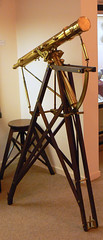
Angela took last week off work, and we made a few day trips to places like the Whipple Museum of the History of Science, Bletchley Park, and the fancy new galleries at the Ashmolean Museum. I don't currently feel inspired to ramble on all this, but I have put a few photos up on Flickr:
The Whipple Museum
Bletchley Park
The Ashmolean
Tuesday, November 24, 2009
Friday, November 20, 2009
Recent Reading: Unseen Academicals
by Terry Pratchett
I was significantly distracted from this book a couple of times during the reading of it, from which you may reasonably infer that it isn't apex Pratchett, in my opinion. I finished it, and sometimes I laughed, but this is an author who's set himself stratospheric standards in my eyes. It's a book about football on the Disc, which didn't help to begin with; I'm not a fan, but the real problem may be, I suspect, that nor is Pratchett, much. I really don't have much of a sense for the core imagery of this topic, but I remember enough from my childish phase of petty enthusiasm and the general experience of growing up in the UK to feel that Unseen Academicals
just doesn't catch things quite right. Where Moving Pictures nailed Hollywood perfectly and hilariously, and Soul Music showed us that there is a mythology of rock and roll of which we were barely aware to exploit, this book has a bit of a tin ear.
For example, the story climaxes - naturally - with a football match, but this is cut short, going to a sudden death option for vaguely plausible but not overwhelming reasons. I can see why a writer would do this - drawing a full ninety minutes of back and forth could easily get very boring - but a real footie fan wouldn't have ducked the challenge. (Interestingly, another of our current brilliant genre-loving humorists, Aaron Williams, similarly truncated a soccer match in PS238 #38 - for, I suspect, very similar reasons.) Even within the match, the climactic moments are described in the voice of a journalist who hasn't invented sports writing yet, giving things a deadening distance; compare the breathtaking Tower of Art/giant blonde scene in Moving Pictures.
The point of the book, in terms of the great accumulating Discworld epic, is another step in the Disc in general and Ankh-Morpork in particular's accelerated evolution from medievalism to modernity, manipulated by an increasingly philosophical Patrician but triggered by a vague outburst of divine intervention. Football is the nominal theme here, and it turns out that Ankh-Morpork has a game of that name, but it's still a distinctly medieval street brawl; various protagonists find themselves obliged to transform it into a game of rules and green fields. There's a brilliant natural player to be encouraged, and his born-to-WAG true love to wander through glowing passively, but Pratchett's lack of deep engagement is shown by the number of other sub-plots. In the depths of the increasingly comic-Gormenghastian Unseen University, we find Trevor Likely, the natural player who avoids playing but who has the gift of the gab (and it's to the book's credit that it never actually uses the hugely appropriate pun that his name demands), but also more importantly, Mr Nutt, one of Pratchett's annoyingly omnicompetent plot-moving heroes, who turns out to have more or less literally wandered in from a completely different fantasy universe. Meanwhile, above stairs, the Archchancellor is suffering annoyance caused by the (initially absent) Dean, who has defected to another university. There is also some stuff with a brilliant cook and with the arts of dwarf fashion, into which Miss Born-to-WAG wanders...
And so it goes on. Trevor must deal with his nemesis, one of Pratchett's petty-nasty sociopaths but not a very clever one, two familiar members of the Watch get a half-page each, a couple of old friends from Uberwald wander past in person or passing description, and eventually the book shudders to a halt. There are interesting hints that this book is Pratchett's reflection on the 1980s and their aftermath, as football is transformed from a faintly violent working-class preoccupation to something more acceptable to the bourgeois wizards, and the mess left by a failed Evil Empire must be cleaned up - but my overwhelming sense at the end was of loose ends untied and plot threads forgotten.
Ah, forgotten... The elephant in the room here is Terry Pratchett's famous health issues. Are they affecting his writing, we have to wonder. Well, he can still create crackling dialogue, eye-grabbing metaphors, sympathetic and unsympathetic characters, and some good jokes. But the loose plotting and uncertain handling of theme may be symptoms of a memory that's not what it was. Or perhaps this book just represents an off year. We'll just have to wait and see.
I was significantly distracted from this book a couple of times during the reading of it, from which you may reasonably infer that it isn't apex Pratchett, in my opinion. I finished it, and sometimes I laughed, but this is an author who's set himself stratospheric standards in my eyes. It's a book about football on the Disc, which didn't help to begin with; I'm not a fan, but the real problem may be, I suspect, that nor is Pratchett, much. I really don't have much of a sense for the core imagery of this topic, but I remember enough from my childish phase of petty enthusiasm and the general experience of growing up in the UK to feel that Unseen Academicals
For example, the story climaxes - naturally - with a football match, but this is cut short, going to a sudden death option for vaguely plausible but not overwhelming reasons. I can see why a writer would do this - drawing a full ninety minutes of back and forth could easily get very boring - but a real footie fan wouldn't have ducked the challenge. (Interestingly, another of our current brilliant genre-loving humorists, Aaron Williams, similarly truncated a soccer match in PS238 #38 - for, I suspect, very similar reasons.) Even within the match, the climactic moments are described in the voice of a journalist who hasn't invented sports writing yet, giving things a deadening distance; compare the breathtaking Tower of Art/giant blonde scene in Moving Pictures.
The point of the book, in terms of the great accumulating Discworld epic, is another step in the Disc in general and Ankh-Morpork in particular's accelerated evolution from medievalism to modernity, manipulated by an increasingly philosophical Patrician but triggered by a vague outburst of divine intervention. Football is the nominal theme here, and it turns out that Ankh-Morpork has a game of that name, but it's still a distinctly medieval street brawl; various protagonists find themselves obliged to transform it into a game of rules and green fields. There's a brilliant natural player to be encouraged, and his born-to-WAG true love to wander through glowing passively, but Pratchett's lack of deep engagement is shown by the number of other sub-plots. In the depths of the increasingly comic-Gormenghastian Unseen University, we find Trevor Likely, the natural player who avoids playing but who has the gift of the gab (and it's to the book's credit that it never actually uses the hugely appropriate pun that his name demands), but also more importantly, Mr Nutt, one of Pratchett's annoyingly omnicompetent plot-moving heroes, who turns out to have more or less literally wandered in from a completely different fantasy universe. Meanwhile, above stairs, the Archchancellor is suffering annoyance caused by the (initially absent) Dean, who has defected to another university. There is also some stuff with a brilliant cook and with the arts of dwarf fashion, into which Miss Born-to-WAG wanders...
And so it goes on. Trevor must deal with his nemesis, one of Pratchett's petty-nasty sociopaths but not a very clever one, two familiar members of the Watch get a half-page each, a couple of old friends from Uberwald wander past in person or passing description, and eventually the book shudders to a halt. There are interesting hints that this book is Pratchett's reflection on the 1980s and their aftermath, as football is transformed from a faintly violent working-class preoccupation to something more acceptable to the bourgeois wizards, and the mess left by a failed Evil Empire must be cleaned up - but my overwhelming sense at the end was of loose ends untied and plot threads forgotten.
Ah, forgotten... The elephant in the room here is Terry Pratchett's famous health issues. Are they affecting his writing, we have to wonder. Well, he can still create crackling dialogue, eye-grabbing metaphors, sympathetic and unsympathetic characters, and some good jokes. But the loose plotting and uncertain handling of theme may be symptoms of a memory that's not what it was. Or perhaps this book just represents an off year. We'll just have to wait and see.
Labels:
Discworld,
Fantasy,
Pratchett,
Terry Pratchett,
Unseen Academicals
Monday, November 16, 2009
Doctor Who no particular date special, November 2009
Well, it was better than the last one. It had a fairly substantial plot, and an opportunity for some acting (from both the lead and the guest stars), and some decent special effects and some references for the old fans to catch. It even attempted some semi-serious hard SF details in its depiction of the near future, with a Mars station that looked like it might work, built at a date when such a thing might well happen. (The chance of keeping NooHoo's future history anywhere near KlassiKoo's skimpy near-future timeline is of course zero, thanks to the passage of time, and the Time War can be safely assumed to have sent waves of borrowed DC Comics cosmic korflu over history.) The attempts at robust logic didn't last long, mind you; we couldn't really expect any sensible depiction of Martian gravity (not on this budget, kid), but when we were told that there were serious mass constraints on what could be shipped to Mars, it was just plain annoying for the station to have big echoing voids and walls that were allegedly made of six feet of steel. (Err, what? I mean, Mars has radiation issues, but six feet of steel?) Nor did the character logic hold up; we had a first human colony on Mars, which suddenly and inexplicably found another (seemingly) human being on its doorstep, and within minutes horrible catastrophic things started happening, and yet after a token comment, nobody tried to blame or interrogate the impossible stranger...
But that was kind of the point. The Radio Times asked rhetorically if this was the scariest Who ever, but it was really just the most Doctor-Who-scary Who that the writers and director could manage - a very, very stock-classical Who plot, in basic, skimpy form. Station in deep space, the Doctor arrives, bad sh*t goes down (thanks to a monster whose nature remained under-explored, but which manifests as a variant on the modern shambling-zombie stereotype, yawn), the Doctor assists the humans as they're picked off one by one; all this was only padded out to an hour by the Doctor's recognition that he couldn't help this time, because this doomed station represented one of those graven-in-stone historic events, and his struggle with what this might really mean to him, particularly in the still-unshaped context of 21st-century NooHoo mythology.
From the start, NooHoo has spent (too) much time attempting ironic deconstructions of 20th-century KlassiKoo tropes; this episode attempted to escalate that deconstruction into actual classical tragic form, with a flawed hero escalating rapidly to Hubris and a flash of blue light as the Nemesis that strikes down his spirit. But what this really meant was just a script that gave David Tenant an excuse to engage in a lot of acting and some wild shifts of supposed motive, and a setup for the two-episode Christmas Special.
Ah yes, the teasers at the end. NooHoo has previously displayed a superhero-comic-style willingness to drag fan-favourite characters back despite having closed them out with loud assertions that they were gone, gone, sealed off by the laws of the multiverse and gone forever, really. Nobody took that claim seriously with regard to the Master, of course; he's just too coolly complete an antagonist for our hero, and there was a hint or two even at the time. But Donna (and her irritating grandpa)? Oh, come on guys; however skimpy the plot logic of her write-out, can't you stand by the integrity of your own closed-loop tragedy, for once? It's not like you had the unbearable pressure of the teen romance fanwank demand that brought back bloody Rose.
Oh, and at the end of the episode, we had a glimpse of an Ood - yes, the wettest alien race in the history of NooHoo or KlassiKoo (wetter by far than this episode's monsters, ho ho). Jeebus. That, after an episode which had mentioned perhaps the most interesting Who-aliens ever, aliens who haven't reappeared in NooHoo. Couldn't we have, say, a Who-New-Space-Opera exploration of the history of Mars, please? A fudge to explain what a high-tech culture was doing there a mere 10,000 years ago and how the same race came to be part of that multi-species commonwealth in the future, plus a CGI treatment of the freeze guns and cryonic technology?
No, of course we can't. Not this year. That would require a bit of cool-headed seriousness. But next year, the show gets a producer who has shown some capacity for seriousness and a real sense of style (even if it also gets an infant Doctor). So I guess I'm hanging in there, for now.
But that was kind of the point. The Radio Times asked rhetorically if this was the scariest Who ever, but it was really just the most Doctor-Who-scary Who that the writers and director could manage - a very, very stock-classical Who plot, in basic, skimpy form. Station in deep space, the Doctor arrives, bad sh*t goes down (thanks to a monster whose nature remained under-explored, but which manifests as a variant on the modern shambling-zombie stereotype, yawn), the Doctor assists the humans as they're picked off one by one; all this was only padded out to an hour by the Doctor's recognition that he couldn't help this time, because this doomed station represented one of those graven-in-stone historic events, and his struggle with what this might really mean to him, particularly in the still-unshaped context of 21st-century NooHoo mythology.
From the start, NooHoo has spent (too) much time attempting ironic deconstructions of 20th-century KlassiKoo tropes; this episode attempted to escalate that deconstruction into actual classical tragic form, with a flawed hero escalating rapidly to Hubris and a flash of blue light as the Nemesis that strikes down his spirit. But what this really meant was just a script that gave David Tenant an excuse to engage in a lot of acting and some wild shifts of supposed motive, and a setup for the two-episode Christmas Special.
Ah yes, the teasers at the end. NooHoo has previously displayed a superhero-comic-style willingness to drag fan-favourite characters back despite having closed them out with loud assertions that they were gone, gone, sealed off by the laws of the multiverse and gone forever, really. Nobody took that claim seriously with regard to the Master, of course; he's just too coolly complete an antagonist for our hero, and there was a hint or two even at the time. But Donna (and her irritating grandpa)? Oh, come on guys; however skimpy the plot logic of her write-out, can't you stand by the integrity of your own closed-loop tragedy, for once? It's not like you had the unbearable pressure of the teen romance fanwank demand that brought back bloody Rose.
Oh, and at the end of the episode, we had a glimpse of an Ood - yes, the wettest alien race in the history of NooHoo or KlassiKoo (wetter by far than this episode's monsters, ho ho). Jeebus. That, after an episode which had mentioned perhaps the most interesting Who-aliens ever, aliens who haven't reappeared in NooHoo. Couldn't we have, say, a Who-New-Space-Opera exploration of the history of Mars, please? A fudge to explain what a high-tech culture was doing there a mere 10,000 years ago and how the same race came to be part of that multi-species commonwealth in the future, plus a CGI treatment of the freeze guns and cryonic technology?
No, of course we can't. Not this year. That would require a bit of cool-headed seriousness. But next year, the show gets a producer who has shown some capacity for seriousness and a real sense of style (even if it also gets an infant Doctor). So I guess I'm hanging in there, for now.
This is Not a Review
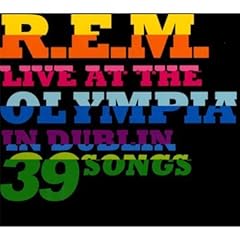
I haven't really followed R.E.M.'s development closely enough to essay a review of Live at the OlympiaI can say that this collection has some songs I recognise, and some I don't, and of the former, there are some wonderful performances, and some which aren't quite as punchy or enthralling as I've heard elsewhere. And I'll note that R.E.M. are clearly a great live band, who it'd be cool to catch in the flesh some day. But that's elementary stuff.
No, the reason I'm posting is simply a thought inspired by the DVD which came with the deluxe set which I picked up. Specifically; how can a band so alert to the history of rock and roll, and so paranoically diligent about avoiding cliche, include so many scenes where they wander around corridors backstage prior to going on. I mean, have they really not seen Spinal Tap?
Thursday, October 29, 2009
Friday, October 23, 2009
Expand, Contract (16)
Now, what lately? Oh yeah, the final draft of GURPS Dungeon Fantasy: Summoners went in, and I reviewed the rough PDFs of a small Transhuman Space freebie that should appear in a little while. And I gather that someone else's Transhuman Space project of the moment is almost contracted for.
So I'm taking a short breather and dealing with some personal business before diving into a Pyramid article I've promised to write and deciding which projects are now at the top of my stack.
Labels:
GURPS,
Roleplaying,
Steve Jackson Games,
Summoners,
Transhuman Space,
Writing
Monday, October 19, 2009
The Imaginarium of Doctor Parnassus
This is a movie about a man with the ability to give people access to the inside of his own imagination (or perhaps more their own imaginations - on this, as on other matters, it's a bit vague). That's slightly ironic, as the best reason to go see it is the chance to spend a couple of hours on the inside of Terry Gilliam's visual imagination.
It's a Gilliam film which reminds one of other Gilliam films, especially Time Bandits but also The Adventures of Baron Munchausen and others - his most visually fantastical efforts, perhaps. However, it's a bit skimpier on actual content even than those, let alone than some of his more serious creations. There's a plot and structure of sorts on offer, involving the power of story (actually questioned quite harshly here, unlike in many fantasy films in our current Gaimanian era, which makes a change) and a deal or two with a rather half-hearted devil, but I was left feeling that any time Gilliam felt that he might sacrifice some clarity in favour of another fancy CGI-assisted set-piece, he took the deal gladly.
The cast is very good, but they've been given a bunch of non-characters to play, with damn all in the way of consistency, a tendency to disappear when no longer needed, and back stories that are at best left largely to our imaginations - and in some cases, notably Verne Troyer's, any hint of an explanation has presumably ended up on the digital cutting-room floor (unless we get a hint at the end that Troyer is some kind of cut-rate guardian angel, which feels like a stretch). Christopher Plummer sticks to doing world-weary like the old trouper he is, while Lily Cole looks amazing, static or in motion (and can act, too), but she and Heath Ledger (and the latter's stand-ins where required) are, well, stuck with the script.
But, but, but... Terry Gilliam. Visual design. CGI aside, the margins and fringes of London have never looked more shabbily gothic (what would film-makers do without Battersea Power Station?), and the way that a faded carnival show can so easily and swiftly expand into a visual wonderland stands as a symbol of, well, something. Time spent here isn't wasted, at all. But it's strange experience to find yourself missing the satirical bite of Time Bandits or a Monty Python sketch.
It's a Gilliam film which reminds one of other Gilliam films, especially Time Bandits but also The Adventures of Baron Munchausen and others - his most visually fantastical efforts, perhaps. However, it's a bit skimpier on actual content even than those, let alone than some of his more serious creations. There's a plot and structure of sorts on offer, involving the power of story (actually questioned quite harshly here, unlike in many fantasy films in our current Gaimanian era, which makes a change) and a deal or two with a rather half-hearted devil, but I was left feeling that any time Gilliam felt that he might sacrifice some clarity in favour of another fancy CGI-assisted set-piece, he took the deal gladly.
The cast is very good, but they've been given a bunch of non-characters to play, with damn all in the way of consistency, a tendency to disappear when no longer needed, and back stories that are at best left largely to our imaginations - and in some cases, notably Verne Troyer's, any hint of an explanation has presumably ended up on the digital cutting-room floor (unless we get a hint at the end that Troyer is some kind of cut-rate guardian angel, which feels like a stretch). Christopher Plummer sticks to doing world-weary like the old trouper he is, while Lily Cole looks amazing, static or in motion (and can act, too), but she and Heath Ledger (and the latter's stand-ins where required) are, well, stuck with the script.
But, but, but... Terry Gilliam. Visual design. CGI aside, the margins and fringes of London have never looked more shabbily gothic (what would film-makers do without Battersea Power Station?), and the way that a faded carnival show can so easily and swiftly expand into a visual wonderland stands as a symbol of, well, something. Time spent here isn't wasted, at all. But it's strange experience to find yourself missing the satirical bite of Time Bandits or a Monty Python sketch.
Labels:
Gilliam,
Movies,
The Imaginarium of Doctor Parnassus
Saturday, October 17, 2009
Life
Don't talk to me about life...
So the latest BBC natural history series is now up and running. Is it what we might expect? Rich-gravelly-paternal David Attenborough voic-eover: check. (Shame he's no longer up to getting out with the camera crews and sitting next to the animals, but that's, well, life.) Blimey-how-did-they-get-that-shot dazzling camerawork in incredibly difficult environments: check. Various weird, cute, or terrifying animals in action: check. (Inflatable eye-stalks? Whuh?) Some of those animals dying and getting eaten: check. (Time was when Spitting Image had a running joke about wildebeest seemingly existing solely to get eaten by lions on the beeb, but these days, technology spreads the pain around, and we get young penguins dying for our edification and a leopard seal's diet. Underwater.) Ten-minute show-your-working making-of snippet tagged on the end: check.
Going by the first installment, what it doesn't have is much of a theme, beyond This Is Life; it apparently no longer needs one. (Well, yes, inflatable eye-stalks - but why, really?) Frankly, its main functions are to justify the license fee and to sell HD televisions. Still, reports suggest that later installments settle into some kind of structure. And watching the darned thing (while Uncle Dave's commentary washes over), it can be hard to complain.
So the latest BBC natural history series is now up and running. Is it what we might expect? Rich-gravelly-paternal David Attenborough voic-eover: check. (Shame he's no longer up to getting out with the camera crews and sitting next to the animals, but that's, well, life.) Blimey-how-did-they-get-that-shot dazzling camerawork in incredibly difficult environments: check. Various weird, cute, or terrifying animals in action: check. (Inflatable eye-stalks? Whuh?) Some of those animals dying and getting eaten: check. (Time was when Spitting Image had a running joke about wildebeest seemingly existing solely to get eaten by lions on the beeb, but these days, technology spreads the pain around, and we get young penguins dying for our edification and a leopard seal's diet. Underwater.) Ten-minute show-your-working making-of snippet tagged on the end: check.
Going by the first installment, what it doesn't have is much of a theme, beyond This Is Life; it apparently no longer needs one. (Well, yes, inflatable eye-stalks - but why, really?) Frankly, its main functions are to justify the license fee and to sell HD televisions. Still, reports suggest that later installments settle into some kind of structure. And watching the darned thing (while Uncle Dave's commentary washes over), it can be hard to complain.
Labels:
David Attenborough,
Life,
Natural History,
Television
Monday, October 12, 2009
Up
As the leading exponents of a new media technology, Pixar make it their business to impress. Toy Story was a strong beginning; Monsters, Inc. demonstrated that they could show every hair on a furry creature; Ratatouille not only showed every hair on a rat, but showed every hair on a wet rat that had been struck by lightning; Wall-E featured grand vistas...
Up shows a photorealistic waterfall plunging off a Lost World plateau, a pack of semi-realistic dogs, and worn-out tennis balls covered in slime - all in immaculate 3D, if you go to the right screen. The humans are still more like plastic puppets, but I'd guess that Pixar won't try to change that until they can get to the far side of the uncanny valley in one titanic leap. Still, things are now getting to the stage that the cartoonish action sequences are looking markedly less plausible than anything else on the screen; increasingly realistic beings obeying unrealistic physics could become a problem. Though audiences used to modern action movies may not have too much trouble with this.
But that still leaves the question of the uses to which this synthetic realism is being put, which is becoming quite strange. Some critics have suggested that the protagonist of Up is a highly unlikely cartoon hero - a squat, grumpy geriatric. Actually, I suspect that "a cranky old man" would have seemed a perfectly reasonably lead character for, say, some of the classic Warner cartoons; it's only Pixar's connections with Disney that make it seem quite so strange, and heck, even Disney were noted for salting their emotional mix with the odd touch of sadness. But no, I don't think that any of the Golden Age Hollywood cartoon studios would have turned one of their movies into a wrenching meditation on aging, mortality, and the loss of dreams. (Not even if the tone shifted into something a little bit more conventional after half an hour or so.) But Up pushes its luck with the conventional cartoon audience fully that far; having the juvenile second lead turn out to come from a broken home, and then having the lead's lifelong hero prove to have been transformed by bitterness into a small-time Bond villain, end up looking like downright conventional touches. Another twist is to have the movie's talking animals - the dog pack - logically explained, and then to get a lot of good comedy from their pretty authentic canine psychology. (Mind you, after we've seen a whole furnished house wafted from North to South America under a cluster of party balloons, having anyone express surprise at a talking dog seems a bit of a cheek.)
Anyway, oh, yes, I nearly forgot - this is a good comedy, showing Pixar's customary eye for multiple details, with nary a clanking pop culture reference. The dogs get to provide most of the jokes, while also providing much of the practical menace; the leads are too busy being tragic. And Pixar do have some sympathy for the feelings of their younger audience members; on at least two occasions, some of the dogs should plunge to their dooms, but are granted soft landings instead. It's not a brutal film - just an oddly thoughtful one.
But where the heck are Pixar going to go next? Is the anglepoise lamp going to play King Lear?
Up shows a photorealistic waterfall plunging off a Lost World plateau, a pack of semi-realistic dogs, and worn-out tennis balls covered in slime - all in immaculate 3D, if you go to the right screen. The humans are still more like plastic puppets, but I'd guess that Pixar won't try to change that until they can get to the far side of the uncanny valley in one titanic leap. Still, things are now getting to the stage that the cartoonish action sequences are looking markedly less plausible than anything else on the screen; increasingly realistic beings obeying unrealistic physics could become a problem. Though audiences used to modern action movies may not have too much trouble with this.
But that still leaves the question of the uses to which this synthetic realism is being put, which is becoming quite strange. Some critics have suggested that the protagonist of Up is a highly unlikely cartoon hero - a squat, grumpy geriatric. Actually, I suspect that "a cranky old man" would have seemed a perfectly reasonably lead character for, say, some of the classic Warner cartoons; it's only Pixar's connections with Disney that make it seem quite so strange, and heck, even Disney were noted for salting their emotional mix with the odd touch of sadness. But no, I don't think that any of the Golden Age Hollywood cartoon studios would have turned one of their movies into a wrenching meditation on aging, mortality, and the loss of dreams. (Not even if the tone shifted into something a little bit more conventional after half an hour or so.) But Up pushes its luck with the conventional cartoon audience fully that far; having the juvenile second lead turn out to come from a broken home, and then having the lead's lifelong hero prove to have been transformed by bitterness into a small-time Bond villain, end up looking like downright conventional touches. Another twist is to have the movie's talking animals - the dog pack - logically explained, and then to get a lot of good comedy from their pretty authentic canine psychology. (Mind you, after we've seen a whole furnished house wafted from North to South America under a cluster of party balloons, having anyone express surprise at a talking dog seems a bit of a cheek.)
Anyway, oh, yes, I nearly forgot - this is a good comedy, showing Pixar's customary eye for multiple details, with nary a clanking pop culture reference. The dogs get to provide most of the jokes, while also providing much of the practical menace; the leads are too busy being tragic. And Pixar do have some sympathy for the feelings of their younger audience members; on at least two occasions, some of the dogs should plunge to their dooms, but are granted soft landings instead. It's not a brutal film - just an oddly thoughtful one.
But where the heck are Pixar going to go next? Is the anglepoise lamp going to play King Lear?
Saturday, October 10, 2009
Expand, Contract (15)
We've closed off the playtesting and I've started work on the final revisions for GURPS Dungeon Fantasy: Summoners. And we're moving along with a proposal for a very nice-looking Transhuman Space PDF supplement that isn't by me.
Not big news, I know, but I thought that people might like to know that I'm not asleep.
Labels:
GURPS,
Roleplaying,
Steve Jackson Games,
Summoners,
Transhuman Space,
Writing
Friday, October 02, 2009
Recent Reading: The Dragons of Babel
by Michael Swanwick
This one took me a while to finish. There were some external reasons for that, but I guess it may have been a bit of a bad sign.
I really rather enjoyed Michael Swanwick's The Iron Dragon's Daughter
, so I was slightly bemused to discover that its sequel didn't seem to be getting UK publication, at least at the time when I looked. Possibly, I should have treated this as a bad sign. However, the Internet offers many solutions to problems, and I picked up an imported US hardback easily enough.
I seem to be hinting that this was a mistake. Well, perhaps it was - but not a catastrophic one. Swanwick can write, and he can also imagine, and his twisted modern vision of fairyland remains impressive. It's just not anything like as impressive this time around.
The Dragons of Babel
reuses the picaresque structuring that worked so well in The Iron Dragon's Daughter, opening this time in a rural village in the fairy world. However, the villagers - a diverse bunch, including young Will, who is to be our hero - are painfully aware that there's a war on, and war-dragons duel in the skies above. One of them is damaged, crashes, drags itself into the village, takes over, and selects Will as its mouthpiece, revealing to him subsequently that his survival in that role proves that he must have mortal blood...
At which point, the past reader of The Iron Dragon's Daughter is wincing at the repetitiveness of it all. But Swanwick sidesteps that accusation fairly smoothly, as Will turns monster-slayer and disposes of the dragon within a few pages. A ghost of its personality actually remains in the back of his mind for the rest of the book, but frankly never does very much; we're getting more than a repeated story. We're just not getting as good a story.
Will is exiled from his village for the acts which his entanglement with the dragon induced, and Swanwick begins his clever shifting of stylistic gears, moving from timeless bucolic idyll/hero-tale to 18th century war-zone travelogue to refugee camp story, all the while enriching things with his modernised fairytale tropes. Then the prisoners, Will included, are transported to Babel, capital of fairyland's dominant political power, New York with extreme magical colour saturation and the dials turned up to eleven, and the book settles into what proves to be its favoured mode; pulp-style, street-level urban adventure. Will finds himself apprenticed to the sort of con artist who the pulps lionised and Hollywood came to love, and learns his way around the city, from the depths of its literal (or hallucinatory) underground to the spires from which it is governed. (Meanwhile, people keep telling him their stories, gently padding the text.) The multiplicity of fairy types dwelling here reflects the uneasy urban melting-pot of the pre-WWII USA, with the semi-incorporeal "haints" in particular suffering the casual prejudice (and displaying the flashes of communal strength and tricksy ingenuity) that elsewhere would be associated with black skins. Unfortunately, Swanwick also feels obliged to drop in a lot of detail that links this setting to our own urban reality, notably throwing in a lot of real-world brand names and trademarks - something I don't remember seeing in the earlier book - and the effect for me is merely jarring, a modernisation too far.
Will makes the mistake of falling in love with a woman beyond his reach, his mentor's big con turns out to have complications on its complications, and a dangerous and uncanny hunter wanders in and out of the plot for no reason that I could easily see (but perhaps I failed to analyse the text closely enough - honestly, I couldn't be bothered to try). Eventually the story reaches a resolution of a reasonable sort, adequately bittersweet and with a few flourishes. If I'd never read The Iron Dragon's Daughter, I'd probably have been more impressed - but this story lacks that one's dark visualisation of growing up as a voyage through story, the climax just isn't as hallucinatory or apocalyptic, and there's no real linkage back to mortality from the otherworld this time, despite the hero's mortal blood. It's just a clever exercise in the use of classic fairytale motifs in a modernistic world - rather too many of them, rather too knowing - when we know that Swanwick is capable of much more.
This one took me a while to finish. There were some external reasons for that, but I guess it may have been a bit of a bad sign.
I really rather enjoyed Michael Swanwick's The Iron Dragon's Daughter
I seem to be hinting that this was a mistake. Well, perhaps it was - but not a catastrophic one. Swanwick can write, and he can also imagine, and his twisted modern vision of fairyland remains impressive. It's just not anything like as impressive this time around.
The Dragons of Babel
At which point, the past reader of The Iron Dragon's Daughter is wincing at the repetitiveness of it all. But Swanwick sidesteps that accusation fairly smoothly, as Will turns monster-slayer and disposes of the dragon within a few pages. A ghost of its personality actually remains in the back of his mind for the rest of the book, but frankly never does very much; we're getting more than a repeated story. We're just not getting as good a story.
Will is exiled from his village for the acts which his entanglement with the dragon induced, and Swanwick begins his clever shifting of stylistic gears, moving from timeless bucolic idyll/hero-tale to 18th century war-zone travelogue to refugee camp story, all the while enriching things with his modernised fairytale tropes. Then the prisoners, Will included, are transported to Babel, capital of fairyland's dominant political power, New York with extreme magical colour saturation and the dials turned up to eleven, and the book settles into what proves to be its favoured mode; pulp-style, street-level urban adventure. Will finds himself apprenticed to the sort of con artist who the pulps lionised and Hollywood came to love, and learns his way around the city, from the depths of its literal (or hallucinatory) underground to the spires from which it is governed. (Meanwhile, people keep telling him their stories, gently padding the text.) The multiplicity of fairy types dwelling here reflects the uneasy urban melting-pot of the pre-WWII USA, with the semi-incorporeal "haints" in particular suffering the casual prejudice (and displaying the flashes of communal strength and tricksy ingenuity) that elsewhere would be associated with black skins. Unfortunately, Swanwick also feels obliged to drop in a lot of detail that links this setting to our own urban reality, notably throwing in a lot of real-world brand names and trademarks - something I don't remember seeing in the earlier book - and the effect for me is merely jarring, a modernisation too far.
Will makes the mistake of falling in love with a woman beyond his reach, his mentor's big con turns out to have complications on its complications, and a dangerous and uncanny hunter wanders in and out of the plot for no reason that I could easily see (but perhaps I failed to analyse the text closely enough - honestly, I couldn't be bothered to try). Eventually the story reaches a resolution of a reasonable sort, adequately bittersweet and with a few flourishes. If I'd never read The Iron Dragon's Daughter, I'd probably have been more impressed - but this story lacks that one's dark visualisation of growing up as a voyage through story, the climax just isn't as hallucinatory or apocalyptic, and there's no real linkage back to mortality from the otherworld this time, despite the hero's mortal blood. It's just a clever exercise in the use of classic fairytale motifs in a modernistic world - rather too many of them, rather too knowing - when we know that Swanwick is capable of much more.
Labels:
Fantasy,
Michael Swanwick,
Swanwick,
The Dragons of Babel
Subscribe to:
Comments (Atom)

