Just by way of a diary note for my personal records, really...
We finally got our dose of Cambridge open-air Shakespeare for the year recently, twice. On the 17th of this month, we saw the Cambridge Shakespeare Festival production of The Two Gentlemen of Verona in Robinson College gardens. I honestly don't think I've seen a live performance of this one before, and while it was fun, I guess that I can see why not. I can quite believe that this was Shakespeare's first play (as seems to be the current academic best guess); it felt like a sketch towards his later comedy career, or somebody trying to emulate a Shakespeare comedy and not getting it quite right. The production pushed for some broad comedy with the outlaws (all female in this production, presumably purely for practical casting reasons), which didn't quite come off for me. Still, even in early, weak Shakespeare, you can suddenly get a jewel like "Who is Silvia? What is she/That all our swains commend her?" dropping in.
The prototypical nature of Two Gentlemen extends to its having a character action towards the end that probably looked a bit off even when it was written, and is likely to annihilate modern audience sympathies for the character involved entirely. Talking of which... The second part of this accidental duo was The Taming of the Shrew, courtesy of the Globe Theatre company on tour, in the Master's Garden at Corpus Christi (a bit of Cambridge architecture I'd not got into before, come to think of it), on the 23rd of the month. I'd not looked at any reviews of this beforehand, so I didn't know it was going to be an all-female cast in vaguely 1920s costume. Which actually worked rather well, especially for Petruchio, who ended up as a rather dashing roaring girl type in a pilot's coat.
But the casting and costumes didn't really address the modern problem of Kate's last speech. That was handled by having her deliver it 100% straight, but then looking at the male characters' reactions, especially Petruchio's. This turned the end of that scene into a big oops, damn moment, as it seemed to dawn on him and that others that he might have gone too far there. He'd really rather liked the untamed Kate, one felt, and now he'd lost that. From then on, everyone delivered their lines hesitantly, going through the motions and giving the play a complete downer ending. Which is probably as good a solution to that issue as any.
Good music, too, by the way.
Showing posts with label Theatre. Show all posts
Showing posts with label Theatre. Show all posts
Thursday, August 29, 2013

Friday, July 13, 2012
The Arts of Empires
Stuff gets left over from the past. And then we suddenly realise that it might be worth remembering, and we find ourselves scrabbling a bit, trying to reconstruct things, put our own interpretations on them, decide what was or wasn't significant.
 I've neglected to blog about the 22nd of last month, until now. It was a moderately busy day, and I've fairly recently finished putting a bunch of photos from then up on Flickr. But actually, those only cover an early part of the day.
Specifically, we made a round trip to Cambridge to catch a couple of things, starting with a visit to the Fitzwilliam Museum, where for one thing, this year's Sculpture Promenade is in full swing. That was the point when I managed to capture a decent array of pictures. As in previous years, it proved amiably brain-stretching; we were mildly amused to run into a miniature prototype for the monumental Peter Randall-Page piece that we met at the Eden Project a while back.
But we had gone to the museum chiefly to catch something that isn't likely to come back often in our lifetimes; an exhibition of 2,000-year-old tomb treasures from China, loaned from two different Chinese museums - so to see all this lot would normally require a long round trip. There was ... a lot of jade, naturally, including two of the famous jade burial suits - not so much jade armour as full-body casings, the product of imperial wealth and the belief that jade preserved the body against corruption. There were also great bronze vessels and domestic bits and pieces, which had (just) survived two millennia of burial. But I guess that the things that spoke most effectively, as art, were rather inevitably the fairly small statuettes, figures from courtly life - especially some swirling dancers, their infeasibly long sleeves falling to the floor oddly like cartoons.
But a piece of art doesn't have to be twenty centuries old to be a period piece. That evening, we had tickets for Noel Coward's Volcano at the Arts Theatre, a relic of an earlier era, but not without amusement value. Actually, this play wasn't produced in Coward's own lifetime, initially because it proved impossible to get Katharine Hepburn on board to play the lead, but probably mostly because the sexual - and especially homosexual - content was a bit heavy for the period. It hasn't had much attention since, either; this is apparently its first-ever major production, complete with Jenny Seagrove gamely tackling the Hepburn maturely-repressed-sexy role. (No other cast members whose names I recognised, I'm afraid; I mostly ended up thinking that a Noel Coward play probably has to feature actresses with names like Finty Williams and Perdita Avery.) I can't say that it struck me as a major work of art, and it's probably not one of Coward's greatest pieces, but I laughed a bit, thought a very little, and reckoned that the staging was pretty good.
The sexual content was clear enough, incidentally, but obviously no big deal by modern standards. I suspect that it took a bit of effort from the director and cast to make the gay element even clearly noticeable, and it represented a rather small twist late in the plot even then. It was hard to avoid feeling that the volcanic eruption - however well staged - ended up as a bad case of the pathetic fallacy being used for emphasis.
But it was something to be seen. Still, it was the Chinese antiquities that were something not to be missed.
I've neglected to blog about the 22nd of last month, until now. It was a moderately busy day, and I've fairly recently finished putting a bunch of photos from then up on Flickr. But actually, those only cover an early part of the day.Specifically, we made a round trip to Cambridge to catch a couple of things, starting with a visit to the Fitzwilliam Museum, where for one thing, this year's Sculpture Promenade is in full swing. That was the point when I managed to capture a decent array of pictures. As in previous years, it proved amiably brain-stretching; we were mildly amused to run into a miniature prototype for the monumental Peter Randall-Page piece that we met at the Eden Project a while back.
But we had gone to the museum chiefly to catch something that isn't likely to come back often in our lifetimes; an exhibition of 2,000-year-old tomb treasures from China, loaned from two different Chinese museums - so to see all this lot would normally require a long round trip. There was ... a lot of jade, naturally, including two of the famous jade burial suits - not so much jade armour as full-body casings, the product of imperial wealth and the belief that jade preserved the body against corruption. There were also great bronze vessels and domestic bits and pieces, which had (just) survived two millennia of burial. But I guess that the things that spoke most effectively, as art, were rather inevitably the fairly small statuettes, figures from courtly life - especially some swirling dancers, their infeasibly long sleeves falling to the floor oddly like cartoons.
But a piece of art doesn't have to be twenty centuries old to be a period piece. That evening, we had tickets for Noel Coward's Volcano at the Arts Theatre, a relic of an earlier era, but not without amusement value. Actually, this play wasn't produced in Coward's own lifetime, initially because it proved impossible to get Katharine Hepburn on board to play the lead, but probably mostly because the sexual - and especially homosexual - content was a bit heavy for the period. It hasn't had much attention since, either; this is apparently its first-ever major production, complete with Jenny Seagrove gamely tackling the Hepburn maturely-repressed-sexy role. (No other cast members whose names I recognised, I'm afraid; I mostly ended up thinking that a Noel Coward play probably has to feature actresses with names like Finty Williams and Perdita Avery.) I can't say that it struck me as a major work of art, and it's probably not one of Coward's greatest pieces, but I laughed a bit, thought a very little, and reckoned that the staging was pretty good.
The sexual content was clear enough, incidentally, but obviously no big deal by modern standards. I suspect that it took a bit of effort from the director and cast to make the gay element even clearly noticeable, and it represented a rather small twist late in the plot even then. It was hard to avoid feeling that the volcanic eruption - however well staged - ended up as a bad case of the pathetic fallacy being used for emphasis.
But it was something to be seen. Still, it was the Chinese antiquities that were something not to be missed.
Thursday, January 05, 2012
Fragments of 2011 (and earlier)
[[Oh dear. Oh dear. Time to clear out some old junk.]]
[[I've been quite busy over the last year or so, and highly prone to displacement activities. Which has meant, among other things, that I've left a whole bunch of draft posts never being completed or posted. Well, we now have a new year, so I'm resolving (despite the fact that I do not do New Year Resolutions) to clear house a bit. These posts are highly incomplete, and they're going to stay incomplete - I'm just going to post them all in one go, as fragments and sketches falling out of my brain over that year or so. I may or may not have tidied, revised, or edited parts of them. Take them or (perhaps better) leave them.]]
[[The first actually goes right back to October 2010, oh dear...]]
Recent Reading: I Shall Wear Midnight
by Terry Pratchett
Terry Pratchett's "Tiffany Aching" books, in the "younger readers" sub-category of Discworld stories, have always suffered from the danger of falling into a fixed pattern. While wandering around her home chalk downlands area and developing her skills, young witch Tiffany Aching encounters a supernatural threat ...
... But Pratchett is too canny a writer to fall too deeply into too rigid a pattern, and this fourth and latest book in the sub-series appears - probably - to show him quitting while he's ahead. Tiffany has aged as a character through the series, and now she's sixteen ...
[[By June 2011, I noticed that I wasn't getting everything I meant to do, done:]]
Catching Up: Late June (Going to Extremes)
I've fallen way behind on my blogging, to the point where the next few entries won't represent diary entries so much as notes made before I forget everything. [[Hah!]] My Flickr photostream is quite a bit more up to date; tinkering with photos seems to work much better as a displacement activity than jotting down text. Yes, I seem to have been keeping busy.
 Anyway, the first un-diarised event in question was a trip westwards. I hadn't been to Cornwall since childhood holidays; it didn't feel as personally resonant as Charmouth and Lyme, but it still felt odd not to have seen the place for quite so long. So we booked a few days in Falmouth.
Okay, so we were in a boutique hotel within sight of a branch of the Rick Stein empire. That wasn't terribly reminiscent of childhood caravanning holidays, but it did permit a few very nice dinners. (The first being very, very good fish and chips. I get the idea about good fried fish melting in the mouth, but this is the first time I've had to use the same phrase for chips.) The hotel was good, too, apart from a shortage of parking, and also the seagulls in the morning, which showed the limitations of the place's sound insulation. ...
[[A little after that, I barely started another post:]]
Theatre: All's Well That End's Well
Shakespeare's Globe, 30/6/2011
On a very occasional theme of trips to the Globe Theatre for lesser Shakespearean drama (i.e. plays by him that we haven't seen often if at all before) ...
[[In July, we got back up to London.]]
Literary Sources and Resources
British devotees of SF sometimes like to think that this country has a special place in the history of the genre. Well, it's true that we did produce Thomas More, Jonathan Swift, Mary Shelley, and H.G.Wells, so we have little to be ashamed of - but the "special" role of British SF is ultimately defined by a negative; we didn't create the pulp magazines (or their contemporary successors, the big-screen Hollywood FX action movies) that still define SF to so many people outside of fandom. Along with those founder-figures, though, we have also produced some extraordinary visionaries in more recent times. The British Library currently has a pair of exhibitions that illustrate all this, and on the 9th, we went along to both.
Why does the BL run such things? Oh, they have the resources - and we also took in their permanent exhibition rooms, which we'd missed out on before ...
[[The two exhibitions were a small one about Mervyn Peake and a large one about British SF in general, by the way. And they were interesting.]]
[[In October, I started blogging about our big antipodean trip. My Flickr photostream is covering that better, actually, albeit long after the event.]]
To the Far Side
October 7-???
... The trip began, on the Friday: taxi (to the coach stop)-coach (to Heathrow)-747 (to Singapore). That was with an afternoon start, so it was a night flight, on which I finally got to see Green Lantern (some smart revisionism regarding goofy Silver Age comics conventions and metaphysics, fuzzy FX visuals in an attempt to get the Green Lantern power to look right, plot all over the shop thanks to Hollywood Oedipal obsession) and Paul (current British ubergeek auteur possibly slips over the edge into self-indulgence, certainly shows rather painful media-geek tin ear for the subtleties and niceties of written SF and its exponents). I also managed an hour or two's sleep before arriving in the future in mid-afternoon.
Well, I suspect that some people would like Singapore to be their vision of the future. It's a bit hot for me - but then, it does have plenty of air conditioning to compensate. The difference between indoors and outdoors is ... extreme. ...
... Tuesday was our one full day in Perth, so we tried to work out our personal highest priorities in the city. First stop was the Perth Mint, a former outpost of the Royal Mint set up to process gold from the gold fields. These days, it's been handed over to the Western Australian state government, it no longer handles gold coinage provision for much of the British Empire, and the refining and casting operations have moved out of town, but the city centre building still has some impressive-looking machinery and a few museum features - including the world's largest collection of gold bars. (Okay, just a couple of rooms' worth - but still.) It also has the facilities to cast a single gold bar, as demonstrated by one of the staff several times per day (using the same gold every time). Okay, so this is basically just a short fireworks display - but an expensive one.
Then we moved on to the city's museum district, to discover that the big Art Gallery no longer opens Tuesdays. Hey ho, the big Museum was open (some good info on the history of the region, Victorian stuffed animals, a pretty good collection of meteorites), and then came lunch in the Gallery cafe, then a short bus ride to big Botanical Garden ...
...
Wedenesday was packing, checking out, and heading out to the rail terminal to get on the Indian-Pacific rail service, departing eastwards just before noon. This is a pretty comfortable way to spend three days crossing Australia, albeit in a compact cabin ... but the food's pretty good. So we spent the afternoon making our way up the valley of the Avon River, and that night, the train stopped for a few hours in Kalgoorlie, so we took a one-hour coach trip in the dark. Much of this was about the driver being flippant about this mining town, but we did get to stop at the biggest hole in the ground in the world. Sadly, this open-cast mine wasn't very active this night, so all we got to see was a couple of distant (very distant) giant (very giant) trucks in patches of spotlight as they went about their gold-gathering business.
Then we hit our bunks to try and catch enough sleep before Thursday, when we were set to cross the Nullarbour plain. Okay, so I was a little disappointed on principle to see a few trees when I woke up, but we moved into a zone of arboreal nullity soon enough. ...
[[Then I got through to November before I started another post.]]
Vermeer's Women: Secrets and Silence
Fitzwilliam Museum, Cambridge.
 ... We must have seen many of these pictures before - they're on loan from museums we've visited over the years - but ... Among other things, we must have Vermeer's Lacemaker in the Louvre, but seeing it in the flesh felt fresh - and showed (or reminded) us that it's actually rather small; the reproduction print we have on the wall at home is actually twice as big. (Banners outside blow these pictures up to huge size; actually mostly rather small.) The Fitzwilliam clearly know what the selling point of this exhibition is ... despite title, only a couple of Vermeers in the show, but plenty of other good stuff ...
[[And there, I leave things and make a fresh start. Hmm, I never even started posting about the Cambridge Shakespeare Festival open air Macbeth, which was good, but which featured one big curious inversion of effect. The evening we went, the first half got played in daylight, while the second half was played in darkness. But the first half is where you get most of the serious plot darkness, as the two lead characters plunge into evil; the second half is basically a political thriller in which light is restored.]]
[[Oh, and in the unlikely event that anyone's wondering; I can no longer be bothered to even say anything about Doctor Who.]]
[[I've been quite busy over the last year or so, and highly prone to displacement activities. Which has meant, among other things, that I've left a whole bunch of draft posts never being completed or posted. Well, we now have a new year, so I'm resolving (despite the fact that I do not do New Year Resolutions) to clear house a bit. These posts are highly incomplete, and they're going to stay incomplete - I'm just going to post them all in one go, as fragments and sketches falling out of my brain over that year or so. I may or may not have tidied, revised, or edited parts of them. Take them or (perhaps better) leave them.]]
[[The first actually goes right back to October 2010, oh dear...]]
Recent Reading: I Shall Wear Midnight
by Terry Pratchett
Terry Pratchett's "Tiffany Aching" books, in the "younger readers" sub-category of Discworld stories, have always suffered from the danger of falling into a fixed pattern. While wandering around her home chalk downlands area and developing her skills, young witch Tiffany Aching encounters a supernatural threat ...
... But Pratchett is too canny a writer to fall too deeply into too rigid a pattern, and this fourth and latest book in the sub-series appears - probably - to show him quitting while he's ahead. Tiffany has aged as a character through the series, and now she's sixteen ...
[[By June 2011, I noticed that I wasn't getting everything I meant to do, done:]]
Catching Up: Late June (Going to Extremes)
I've fallen way behind on my blogging, to the point where the next few entries won't represent diary entries so much as notes made before I forget everything. [[Hah!]] My Flickr photostream is quite a bit more up to date; tinkering with photos seems to work much better as a displacement activity than jotting down text. Yes, I seem to have been keeping busy.
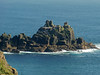
Okay, so we were in a boutique hotel within sight of a branch of the Rick Stein empire. That wasn't terribly reminiscent of childhood caravanning holidays, but it did permit a few very nice dinners. (The first being very, very good fish and chips. I get the idea about good fried fish melting in the mouth, but this is the first time I've had to use the same phrase for chips.) The hotel was good, too, apart from a shortage of parking, and also the seagulls in the morning, which showed the limitations of the place's sound insulation. ...
[[A little after that, I barely started another post:]]
Theatre: All's Well That End's Well
Shakespeare's Globe, 30/6/2011
On a very occasional theme of trips to the Globe Theatre for lesser Shakespearean drama (i.e. plays by him that we haven't seen often if at all before) ...
[[In July, we got back up to London.]]
Literary Sources and Resources
British devotees of SF sometimes like to think that this country has a special place in the history of the genre. Well, it's true that we did produce Thomas More, Jonathan Swift, Mary Shelley, and H.G.Wells, so we have little to be ashamed of - but the "special" role of British SF is ultimately defined by a negative; we didn't create the pulp magazines (or their contemporary successors, the big-screen Hollywood FX action movies) that still define SF to so many people outside of fandom. Along with those founder-figures, though, we have also produced some extraordinary visionaries in more recent times. The British Library currently has a pair of exhibitions that illustrate all this, and on the 9th, we went along to both.
Why does the BL run such things? Oh, they have the resources - and we also took in their permanent exhibition rooms, which we'd missed out on before ...
[[The two exhibitions were a small one about Mervyn Peake and a large one about British SF in general, by the way. And they were interesting.]]
[[In October, I started blogging about our big antipodean trip. My Flickr photostream is covering that better, actually, albeit long after the event.]]
To the Far Side
October 7-???
... The trip began, on the Friday: taxi (to the coach stop)-coach (to Heathrow)-747 (to Singapore). That was with an afternoon start, so it was a night flight, on which I finally got to see Green Lantern (some smart revisionism regarding goofy Silver Age comics conventions and metaphysics, fuzzy FX visuals in an attempt to get the Green Lantern power to look right, plot all over the shop thanks to Hollywood Oedipal obsession) and Paul (current British ubergeek auteur possibly slips over the edge into self-indulgence, certainly shows rather painful media-geek tin ear for the subtleties and niceties of written SF and its exponents). I also managed an hour or two's sleep before arriving in the future in mid-afternoon.
Well, I suspect that some people would like Singapore to be their vision of the future. It's a bit hot for me - but then, it does have plenty of air conditioning to compensate. The difference between indoors and outdoors is ... extreme. ...
... Tuesday was our one full day in Perth, so we tried to work out our personal highest priorities in the city. First stop was the Perth Mint, a former outpost of the Royal Mint set up to process gold from the gold fields. These days, it's been handed over to the Western Australian state government, it no longer handles gold coinage provision for much of the British Empire, and the refining and casting operations have moved out of town, but the city centre building still has some impressive-looking machinery and a few museum features - including the world's largest collection of gold bars. (Okay, just a couple of rooms' worth - but still.) It also has the facilities to cast a single gold bar, as demonstrated by one of the staff several times per day (using the same gold every time). Okay, so this is basically just a short fireworks display - but an expensive one.
Then we moved on to the city's museum district, to discover that the big Art Gallery no longer opens Tuesdays. Hey ho, the big Museum was open (some good info on the history of the region, Victorian stuffed animals, a pretty good collection of meteorites), and then came lunch in the Gallery cafe, then a short bus ride to big Botanical Garden ...
...
Wedenesday was packing, checking out, and heading out to the rail terminal to get on the Indian-Pacific rail service, departing eastwards just before noon. This is a pretty comfortable way to spend three days crossing Australia, albeit in a compact cabin ... but the food's pretty good. So we spent the afternoon making our way up the valley of the Avon River, and that night, the train stopped for a few hours in Kalgoorlie, so we took a one-hour coach trip in the dark. Much of this was about the driver being flippant about this mining town, but we did get to stop at the biggest hole in the ground in the world. Sadly, this open-cast mine wasn't very active this night, so all we got to see was a couple of distant (very distant) giant (very giant) trucks in patches of spotlight as they went about their gold-gathering business.
Then we hit our bunks to try and catch enough sleep before Thursday, when we were set to cross the Nullarbour plain. Okay, so I was a little disappointed on principle to see a few trees when I woke up, but we moved into a zone of arboreal nullity soon enough. ...
[[Then I got through to November before I started another post.]]
Vermeer's Women: Secrets and Silence
Fitzwilliam Museum, Cambridge.

[[And there, I leave things and make a fresh start. Hmm, I never even started posting about the Cambridge Shakespeare Festival open air Macbeth, which was good, but which featured one big curious inversion of effect. The evening we went, the first half got played in daylight, while the second half was played in darkness. But the first half is where you get most of the serious plot darkness, as the two lead characters plunge into evil; the second half is basically a political thriller in which light is restored.]]
[[Oh, and in the unlikely event that anyone's wondering; I can no longer be bothered to even say anything about Doctor Who.]]
Friday, May 06, 2011
Theatre (sort of): Frankenstein
(I'm catching up - partially, slowly - on an embarrassingly long string of blog posts that are sitting on the system in incomplete draft mode. Hence the age of this one)
National Theatre, London, transmitted to the Arts Cinema, Cambridge, 24/03/2011
 Another live broadcast from the National Theatre to the Arts Cinema in Cambridge, and this time it's the hot ticket of the London theatre season - Nick Dear and Danny Boyle's stage treatment of one of the key modern myths
 . Which turned out to be pretty good and quite well suited to high-definition broadcast to cinema, with a certain amount of playing with camera angles and viewpoints, and enough chances to observe the stage design, especially the giant chandelier laden with as many different types of light bulb as someone could find.
It was all a pretty consciously stagey sort of production, with a consciously brave wordless extended opening scene as the creature was born, a brief outburst of steampunk as it encountered some horrified urban proles, and lots of colourblind casting. One problem, perhaps, was that Jonny Lee Miller looked merely rugged and a bit scarred as the creature, while everyone who met him was obliged to react as though he was some kind of nigh-Lovecraftian abomination; even given the level of abstraction in the visuals, I found it hard to suspend disbelief quite enough there.
But we all know that the monster is hideous, don't we? Like I said, modern myth. It's been a while since I read the novel, and once or twice I found myself trying to remember whether some elements came from there, or whether they'd sneaked in from the films - the elderly exiled intellectual in the woodland cottage is in the book, of course, but was he originally blind? Actually, yes - Dear follows Shelley quite faithfully in that scene, but in so doing, can't help but remind audiences of the movies (including Young Frankenstein). No great matter, to be sure, but it's all a reminder of the potential complexities involved in adapting a text as time-crusted as this one.
But yes, Dear's script did cleave to the core myth fairly well throughout- although it always seems a shame that Robert Walton, the Arctic explorer, so rarely makes it into adaptations, even when, like this one, they end in the Arctic. (The absence of that observer made the ending a bit anticlimactic, I'm afraid.) The one rather jarring and consciously "modern" - though actually rather dated-seeming - inclusion was some pointedly feminist stuff about Frankenstein being a heartless male scientist who needed to pay more attention to nice intuitive feminine ethics, or at least to listen when his fiancée asked if she could learn about his work. Okay, okay, so Mary Shelley has a significant part in feminist history, and certainly, if you look at Frankenstein's behaviour at all seriously, he treats Elizabeth abominably - but if you're going to treat that relationship at all logically, then there's no good reason for her to put up with him at all (apart from the dominant influence of the rest of the family). The only effect of this added stuff, for me, was a sense of 1970s right-onnery lurching into the middle of this Georgian gothic-romantic lunacy.
Probably, in fact, the production should have gone all-out for gothic effect, and forget any attempts to inject a modern moral consciousness or to explore the relationship between creator and creature. (Benedict Cumberbatch was more than fine as Victor, by the way, leaving me curious as to how the alternate-nights presentations, with him as the monster and Miller as Victor, played out. The idea felt wrong, but that may just say something about Cumberbatch's skill as an actor.) Mary Shelley was being entirely morally serious, yes, but on a topic which has been thrashed out every which way and tackled by two hundred years' worth of political thinkers and science fiction writers. At the risk of sounding all post-modernist, it really isn't the same story now that it was then, even if you tell it in the same words.
But it's a story that's survived for a good reason, and it's always interesting to watch experts having another go at this sort of thing. And nice to see technology being expertly and benevolently applied to bring it to a wider audience.
National Theatre, London, transmitted to the Arts Cinema, Cambridge, 24/03/2011
 . Which turned out to be pretty good and quite well suited to high-definition broadcast to cinema, with a certain amount of playing with camera angles and viewpoints, and enough chances to observe the stage design, especially the giant chandelier laden with as many different types of light bulb as someone could find.
It was all a pretty consciously stagey sort of production, with a consciously brave wordless extended opening scene as the creature was born, a brief outburst of steampunk as it encountered some horrified urban proles, and lots of colourblind casting. One problem, perhaps, was that Jonny Lee Miller looked merely rugged and a bit scarred as the creature, while everyone who met him was obliged to react as though he was some kind of nigh-Lovecraftian abomination; even given the level of abstraction in the visuals, I found it hard to suspend disbelief quite enough there.
But we all know that the monster is hideous, don't we? Like I said, modern myth. It's been a while since I read the novel, and once or twice I found myself trying to remember whether some elements came from there, or whether they'd sneaked in from the films - the elderly exiled intellectual in the woodland cottage is in the book, of course, but was he originally blind? Actually, yes - Dear follows Shelley quite faithfully in that scene, but in so doing, can't help but remind audiences of the movies (including Young Frankenstein). No great matter, to be sure, but it's all a reminder of the potential complexities involved in adapting a text as time-crusted as this one.
But yes, Dear's script did cleave to the core myth fairly well throughout- although it always seems a shame that Robert Walton, the Arctic explorer, so rarely makes it into adaptations, even when, like this one, they end in the Arctic. (The absence of that observer made the ending a bit anticlimactic, I'm afraid.) The one rather jarring and consciously "modern" - though actually rather dated-seeming - inclusion was some pointedly feminist stuff about Frankenstein being a heartless male scientist who needed to pay more attention to nice intuitive feminine ethics, or at least to listen when his fiancée asked if she could learn about his work. Okay, okay, so Mary Shelley has a significant part in feminist history, and certainly, if you look at Frankenstein's behaviour at all seriously, he treats Elizabeth abominably - but if you're going to treat that relationship at all logically, then there's no good reason for her to put up with him at all (apart from the dominant influence of the rest of the family). The only effect of this added stuff, for me, was a sense of 1970s right-onnery lurching into the middle of this Georgian gothic-romantic lunacy.
Probably, in fact, the production should have gone all-out for gothic effect, and forget any attempts to inject a modern moral consciousness or to explore the relationship between creator and creature. (Benedict Cumberbatch was more than fine as Victor, by the way, leaving me curious as to how the alternate-nights presentations, with him as the monster and Miller as Victor, played out. The idea felt wrong, but that may just say something about Cumberbatch's skill as an actor.) Mary Shelley was being entirely morally serious, yes, but on a topic which has been thrashed out every which way and tackled by two hundred years' worth of political thinkers and science fiction writers. At the risk of sounding all post-modernist, it really isn't the same story now that it was then, even if you tell it in the same words.
But it's a story that's survived for a good reason, and it's always interesting to watch experts having another go at this sort of thing. And nice to see technology being expertly and benevolently applied to bring it to a wider audience.
Tuesday, September 07, 2010
Theatre: Twelfth Night
Cambridge Shakespeare Festival, 28/8/2010
(Note to self; you enjoy Cambridge Shakespeare Festival productions, Philip, so you really should get to them earlier in the year. The last night of the last performance looks like brinkmanship. Fortunately, the weather held, this time.)
And it's back to Robinson College gardens for another comedy - more unambiguously comic than last year's, mind. It's still a nice venue for theatre on a nice evening, although this production doesn't seem quite to have got the hang of working with the space - lines were getting lost in the shrubbery, cast members were trying to interact from too far apart. Still, mostly, they were pretty good. Mind you, I've seen some not-very-similar Violas and Sebastians in my time, but these two really were exceptional - about a foot apart in height, and with no other similarities. Hey ho, accept the theatrical convention.
The director's line here seemed to be that Illyria is almost entirely inhabited by foppish loons - not just Sir Toby and Sir Andrew, Duke Orsino is pretty much as bad. This explains why Olivia isn't very interested in him - she's trying to be a sensible person and is still genuinely in mourning, but none of the aristocratic layabouts around her will be sensible - and why she falls so promptly for Viola/Cesario, who acts moderately seriously as well as being quite charismatic. (This Olivia then flips over into a state of girlish lust, abandoning black like a shot now she's got someone she can be cheerful rather than silly with, but then throwing herself very energetically at the object of her affections, which must be nice for Sebastian when she grabs him but doesn't look very consistent.) However, this then leaves a problem of explaining why the smart Viola should fall for the goofy Orsino... I know, she just does, okay? It's a Shakespeare comedy.
And, to be fair, quite funny in this production - notoriously not always the way with Shakespeare comedies, and not just because of Malvolio's character story (marginalised at the end in a faintly embarrassed way here). The Shakespeare Festival continues to make Shakespeare productions that are worth going to see. Must try to get to it more efficiently next year.
Saturday, February 13, 2010
Theatre (sort of): Nation
National Theatre, London, transmitted to the Arts Cinema, Cambridge, 30/1/2010
The trick of taking operas and plays from major venues and transmitting them live to substantial cinemas via high-definition channels and appropriately competent display technology is a nice one, and this is the latest instance I've caught at the Arts in Cambridge; the National's Christmas show, an adaptation of Terry Pratchett's younger-readers alternate-world story by Mark Ravenhill. It seemed to be using more cameras and camera angles than previous transmissions of this type that I've seen, sometimes showing the projecting-stage performance from close up or even, bizarrely, from above. However, it was still a stage performance, using stage effects (puppets, cast members moving in and out of the spotlight, a model ship on yards of rippling fabric to represent the sea), rather than a movie with fancy CGI. For the first ten minutes or so, I found this a bit disconcerting, even silly, but the human brain can adjust to things; it came to work.
This was, as it proved, a pretty faithful adaptation of the novel, even preserving Pratchett's slightly cumbersome outer framework - although the first scene of chapter 1 was moved to late in the play (which I thought was a small mistake). A stage production couldn't convey the apocalyptic sense of the early scenes, of course, and the wildly (excessively?) dramatic flight from the great cave was necessarily lost; come to that, at a few times, the mime depiction of grand actions looked a bit silly. But - so far as I could recall, not having read the book for a year or so - pretty much everything seemed to be in there. The most substantial change was to the nature of Cox, the major villain of the piece, who was transformed from one of Pratchett's quasi-motivelessly malign psychopaths to someone with a personal connection to Daphne, the heroine; I guess that this gave the plot a bit more sharpness and focus, but it did have something of the loathsome Hollywood/kung fu movie habit of making every conflict personal.
Anyhow - on its own terms, the play worked pretty well, playing out Pratchett's intricate dance of ideals and ideologies, complete with lapses into mysticism despite the general humanist-materialist tenor of the argument. I get the impression that people who didn't know the book have been a bit confused by this thing, and to be honest, the book isn't one of Pratchett's best; both book and play may be a bit too schematic, really. It was well cast, though, I thought; Gary Carr and Emily Taaffe made attractive young leads, while Jason Thorpe had a gift of a role as Milton the parrot (no, really). The visual effects and puppet-work were great, too, helping to transport the audience into this strange tale. I wonder if the audience in London had a big advantage in being in the same room as all this stuff, or whether those of us watching the transmission, with all those multiple angles and close-in shots actually did better?
Whatever. An entertaining afternoon, and a good use of promising technology. Hey, if they just doubled the bandwidth, they could do this stuff in 3D...
Monday, September 21, 2009
Theatre: The Hypochondriac
Arts Theatre, Cambridge, 18/9/2009
There is a certain category of old-fashioned stage comedy that is basically King Lear repeated as farce - the foolish old patriarch has to Learn Better before his (generally) loving daughter can claim the romantic independence she has so richly earned, while the villains who've exploited his folly have to be exposed (comically) and thus defeated. Molière's Le Malade Imaginaire is one of these; it's also a satire on the medical profession, from an era when seeing a doctor was probably a risky enough act, even if you were genuinely ill, that such attacks could be fully justified.
This production uses a new translation, by the always likeable Roger McGough, commissioned in the wake of a previous successful Molière translation from his hand. It makes the play into a franglais farce, albeit largely in fractured comic poetry well up to his general standards; still, given the amount of toilet humour (which apparently initially put McGough off attempting this particular play, so I doubt that he's added much) and the need of which he's spoken to work around (or sometimes, in practice, update) all the song-and-dance interludes that were standard in the period, I don't think that he could seriously be accused of lowering the tone much. Anyway, the thing raised a lot of honest laughter from the audience, which ain't bad for a 336-year-old comedy in anything like its original state. My knowledge of Molière is kind of patchy, but I guess his rep may well be well earned.
The production, incidentally, makes good use of a classic and classical single-location set and a highly competent cast. The acting and direction focus on the farcical aspect - I imagine that a different approach could make Argan, the old hypochondriac, into a more pathetic figure - but I don't think that anyone in this audience was complaining.
Tuesday, August 25, 2009
Theatre: The Comedy of Errors
Emmanuel College Master's Garden, 23/8/2009
Another day, another problem Shakespeare comedy. The problem in this case - the reason why this one doesn't get produced so much (I'd never seen it live before) - being of course that some people aren't sure if it's actually any good. It barely even makes it to the dictionary of quotations, after all. But the company from Shakespeare's Globe have not only tackled it; they've taken it on tour, in an authentic-practices sort of approach with a booth stage (a rectangular canvas box forming the back of the small, low temporary stage) and a cut-back cast engaging in much doubling up - albeit with costumes that mix modern dress and vaguely period-eastern-Mediterranean style (to go with some Arabic-style clarinet-based music, hookah pipes, and so on).
And hey, they had me convinced by the end that this early Shakespeare piece is worth seeing occasionally. It may be a farce that's labeled as a Comedy, but it turns out that Shakespeare could orchestrate a pretty decent farce when he wanted to (okay, borrowing hard from three different Latin sources); it's not Feydeau - a lot depends on someone who's spent several years searching for his long-lost twin brother not having the faintest idea why a town full of people might be mistaking him for someone else - but it raises quite a few laughs and has at least a touch of poignancy.
Not that this production tried too hard for the last, after an affecting opening scene. The doubling up included several major parts and both the pairs of twins who are central to the plot, which worked perfectly well until the climax, when they're finally supposed to be on stage together - and so the final scene saw life-sized cardboard cut-outs of two of the cast wheeled on to act as place-holders, while another actor, doubling the Duke and Angelo, spent a lot of time switching postures while talking to himself. The cast were slick enough to make this very funny, but it couldn't rise above the level of mock-amateur slapstick. Still, think of a touring Elizabethan theatre company, playing something originally written to entertain a bunch of drunken lawyers to a random audience of unlettered provincials, working with the resources they had available, and this was probably about right.
Mind you, on those terms, playing it in a University garden isn't strictly right - apparently, the University banned theatre companies. But on a nice day, with a picnic blanket and a production that was clever enough to make itself look convincingly rough-and-ready, who cares?
Saturday, August 22, 2009
Theatre: Measure for Measure
Cambridge Shakespeare Festival, 21/8/2009
And we finally got to catch a Cambridge Shakespeare Festival production this year, a week before the thing wound down. In Robinson College Gardens, too, which we hadn't seen properly before, and which turn out to be very nice for this sort of thing. And the weather, we earlier in the day, turned nice for the evening, if a little cool by the end...
Okay, the play. One of Shakespeare's more problematic numbers, of course, being technically a comedy but really not funny - this production did its best with the bawdy house inhabitants and other minor parts, but even that wound up being more about the flaws in humanity than about actual humour. The play ends in marriage or marriages, yes, but these are marriages as punishment. (Mind you, I do wonder if the thing worked for Elizabethan English audiences as a huge joke about Catholicism and Catholics, with their wacky un-English obsessions with sin and virginity and confession and absolution and all that. Is the Duke even a Catholic god, or at least a symbol of the Catholic church, all manipulative power and arbitrary forgiveness when it suits him?) It's a tough play to produce by Shakespeare's standards, but interesting.
I guess that the normal response these days is to see it as a story about tyranny and power, with the Duke as an arbitrary manipulator and his brother as a Puritan tyrant. This production, though, took a different line, treating the Duke as a hell of a lot less clever than he thought he was; he fumbled around attempting unsuccessful jokes and unwise tests of other people's attitudes, causing widespread unnecessary pain and really not understanding why Isabella gave him such a dirty look at the end when he tried to propose marriage to her. Angelo, meanwhile, just lacked self-knowledge, hurtling into his appalling behaviour because he didn't have a clue how people worked. Let's face it, this is a horrifically dysfunctional sort of family to have running your country on any terms; in this version, they were downright clueless. Vienna, one felt, was in as much trouble in the long term as in the short.
Technically, this was a punchy presentation, coming it at around two hours including an interval, and even losing one or two of Lucio's sharper lines that often grab the audience's sympathy. This Lucio was shaved bald and wearing white face-paint that made him look part clown, part syphilis victim, and part goblin; definitely one of the bawdy house crew, not a fallible but morally honest everyman. The quasi-comic bawdy house business also involved a leather-aproned, bare-buttocked executioner (just a small part on a cold evening, boom boom), a lot of shouting, and some weird free jazz noises from offstage that didn't help the clarity of the performance. Still, it was Shakespeare on a summer evening, as the shadows drew in and things became colder; Measure for Measure had the way of things all too well.
Sunday, April 19, 2009
Theatre: A Song at Twilight
Arts Theatre, Cambridge, 18/4/2009
Late-period Noel Coward - 1960s, in fact - but definitely Noel Coward. If a lot of it seemed to be an excuse for the two leads to stand around spitting aphorisms at each other, well, they were pretty good aphorisms, and Peter Egan and Belinda Lang spat them pretty well.
And it does have some pretensions to theme. It's hopefully not giving too much away about the plot to note that it's quite explicitly a story from very shortly before the legalization of homosexuality in Britain, which occasionally gives it the air of a period piece. One imagines that, these days, rather more of the audience will be rather more shocked by the not-a-self-portrait-honest! lead character's crappy treatment of the people he supposedly loves or who love him than by any of that stuff - and the audience audibly gasped at one of his casual jibes about the German people, although I'd guess that this was at least somewhat consciously meant as part of the revelation of his real character. To the extent that he may be a self-portrait, it's a fairly brutal one - although having the two women in the play telling him what a genius he is, for all his flaws, from time to time, might be considered dubious.
But never mind the gay stuff - what dates this for me is the revelation that a well-preserved, quite stylish lady of a certain age has no teeth, just a full set of dentures. Yay for medical progress, is what I say.
Sunday, March 01, 2009
Theatre: God of Carnage
Arts Theatre, Cambridge, 28/2/2009.
Yes, it's been rather a theatrical month round here. God of Carnage is by French playwright Yasmina Reza, who was also responsible for Art, which I saw a few years ago. The story goes that Reza proclaimed herself bemused when Art (in translation) won a Best Comedy award, as she thought that she was writing a tragedy; well, if God of Carnage wasn't originally intended as a comedy, then the translator, Christopher Hampton, must have added a lot of jokes in the course of his work (which is possible, I guess). But it also wants to be a bit more than "just" a comedy.
Mind you, this production sells on more than Reza's name, with a cast including the ever-wonderful Richard E. Grant, plus Roger Allam (not a name I recognised, but his face is familiar from lots of British TV, and he's good), Serena Evans, and Lia Williams. The plot is more setting-specific than that of Art - this is very overtly a story of the Parisian bourgeoisie, with lots of specific details - and tries rather hard to expose bourgeois failings. Two couples meet to discuss the fact that one of their young sons has beaten up the other, in an atmosphere of strained civility, and things naturally go downhill quickly from there. This collapse is predictable, and not just because it's necessary for the play to exist; one of the men rapidly demonstrates an appalling mobile 'phone addiction, while the other mentions an incident involving a hamster without realising how badly it shows him up... These aren't really civilised people.
Mind you, I'm not sure what sort of people they are. The mobile 'phone junkie is a lawyer who is dealing with a problematic corporate case, but he also seems to have some kind of background in international criminal law; one of the women is a mild-mannered liberal housewife who has somehow written a publishable book about Darfur. I had a slight sense that they had whatever features the plot demanded.
Which plot does dearly want to be taken seriously. This isn't just four people getting into screaming comedic rows, you understand; it's a picture of the flaws and dishonesty that fail to disguise the weakness and savagery of humanity. We're supposed to take the play's title seriously, you see; God is a god of carnage. Oh dear; I'm not actually sure that a four-hand, one-act bourgeois comedy can really support the weight of all this, and throwing in references to real, unspeakable tragedies like Darfur to add weight could just look dangerously crass. But perhaps I'm being too Anglo-Saxon about this. And it is rather a good bourgeois comedy.
Sunday, February 22, 2009
Theatre: Where There's a Will
Arts Theatre, Cambridge, 21/2/2009.
One could ask what one of our leading theatrical knights - a former director of the RSC and the National Theatre, pushing 80 - is doing touring the provinces with an early pocket-sized Feydeau farce. The answer, though, is quite likely "having fun", or maybe "very well, thanks". (Okay, it also turns out that his wife, Nicki Frei, was responsible for this new translation.) His program notes suggest that Peter Hall sees this play as a formal theatrical exercise... But that sounds too po-faced for what is actually an effective comedy executed in an attractive production. Very attractive, actually; the scene is the reception room of a Parisian town house, decorated in light Art Nouveau style, and the cast look dead stylish in Edwardian costume. It's great to look at. I thought that the cast were good, too, quick and straight-faced; for a while I thought that Sara Stewart was channeling Felicity Kendal, but actually I think itwas just a similar intonation (and the sort of part she was playing).
The farce is up to Feydeau's usual standards - more talky rather than slapstick by some standards, but with a certain amount of climbing in and falling out of windows. The plot also leans on some very theatrical, possibly distinctly period use of hypnotism, although this isn't over-used. It naturally also features the sort of total amiable sexual amorality that gave France such a reputation for naughtiness among straight-laced Anglo-Saxons of the time.
Anyway, I enjoyed it.
Sunday, February 08, 2009
Theatre: Life & Beth
Arts Theatre, Cambridge, 7/2/2009.
One of the many odd gaps in my theatrical education involves Alan Ayckbourn. I've seen a few things of his on the TV from time to time, I believe, but I'm not sure I'd caught any on stage until we got to Absurd Person Singular at the Arts last November. But, yesterday, we followed that up with Life & Beth.
Actually, I suspect that this is relatively minor Ayckbourn. It's not terribly long (under two hours with the interval), it's got a fairly small cast, and it doesn't seem to be readable as much of a big political allegory. It's also pretty well impossible to discuss without giving away bits and pieces of the plot, so please be warned if you're going to catch this...
Actually, though, one doesn't need to know a lot about the plot to find, say, the big theatrical coup at the end of the first act not very surprising. The thing is generally a bit slight, to be honest; the overt jokes are few and far between, and only the central character is allowed any development; one of the others comes on completely mute, for rather weak reasons, and just stays that way. As all of the (living) characters are living lives of apparently-very-Ayckbournian quiet desperation, this makes the thing seriously bleak, if you let your attention shift from Beth herself. She ends up a bit better off, but by a not-very-startling route.
(Beth, by the way, was played by Liza Goddard, who ended up looking much more aged and careworn than she evidently does in reality. Marks for lack of actorly vanity there.)
The only things I was left wondering about were (a) how the central couple were so widely assumed to have a perfect marriage, when one of them was such a blatant, classical jerk, and (b) quite where Gordon actually went post mortem (assuming that he wasn't just a figment), as I think that there were some slightly dark hints.
All of which probably sounds much more negative than it should. The fact is that Ayckbourn can write, and create characters, and I'll be aiming to fill that gap in my education further in future, when the opportunity arises.
Subscribe to:
Posts (Atom)
